
In the demanding worlds of military operations, industrial fieldwork, medical mobility, outdoor logistics, remote IoT deployments, and even modern wearables used in harsh conditions, battery life isn’t just a convenience — it’s mission-critical. A rugged handheld tablet, portable diagnostic device, field sensor, or tactical wearable that dies mid-shift can compromise safety, productivity, data integrity, or even lives. Traditional LCDs have long been the backbone of these applications due to their proven reliability, excellent sunlight readability, wide temperature tolerance, and cost-effectiveness compared to OLED alternatives. However, as devices continue to shrink, become more portable, and face increasingly harsh environments, the demand for ultra-low-power designs has intensified dramatically.
The latest wave of LCD advancements—including memory-in-pixel (MIP) technology, advanced transflective enhancements, IGZO TFT backplanes, mini-LED backlighting with intelligent control, quantum-dot color boosts, and hybrid approaches—is slashing power consumption while preserving or enhancing the rugged performance that AGDisplays specializes in delivering. These innovations enable devices to operate for days, weeks, or even months longer on the same battery capacity, reducing weight, minimizing recharge needs in remote areas, supporting always-on functionality without excessive power draw, and aligning with the growing emphasis on energy-efficient components in the rugged display sector.
In this comprehensive post, we’ll explore the technical underpinnings of these breakthroughs, side-by-side power benchmarks, integration with energy-harvesting and advanced HMI features, real-world case studies with quantifiable metrics, thermal and certification strategies, challenges and solutions, end-of-life management, customer ROI examples, market trends through 2026 and beyond, sustainability impacts, and a practical guide for OEMs. Whether you’re designing next-gen military handhelds, industrial tablets, medical portables, or battery-powered edge sensors for outdoor use, understanding these low-power LCD evolutions is essential for future-proofing your products and gaining a competitive edge.
The Power Challenge in Rugged Battery-Powered Applications
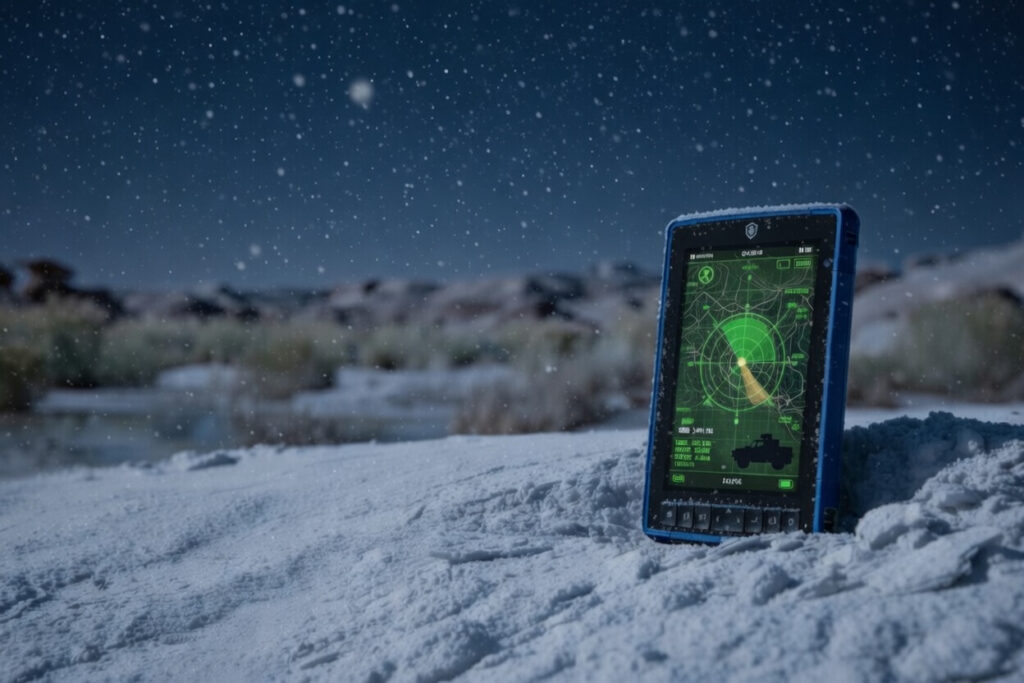
Rugged devices must endure extremes: temperature swings from -40°C to +85°C (or beyond in some MIL-STD specs), constant vibration and shock (MIL-STD-810G/H), dust/water ingress (IP67+), electromagnetic interference (EMI per MIL-STD-461), and direct sunlight exceeding 100,000 lux that washes out standard screens. A conventional active-matrix TFT LCD might consume 200–500 mW just to maintain a static or slowly updating image, with the backlight often accounting for 70–90% of total power in transmissive modes.
For always-on or low-update-rate interfaces—such as status dashboards on military tactical radios, inventory scanners in warehouses, patient vital-sign monitors in ambulances, remote environmental sensors in oil fields, or even ana-digi dials in field watches—that constant refresh cycle drains batteries rapidly. The consequences include shorter mission durations, more frequent (and often impractical) recharges in the field, oversized batteries that add unwanted weight and bulk, increased thermal load in sealed enclosures, and higher total cost of ownership over the device lifecycle.
Industry trends underscore the urgency. The global rugged display market was valued at approximately USD 12.79 billion in 2025 and is projected to reach USD 24.38 billion by 2035, growing at a CAGR of 6.66%. A key driver is demand for energy-efficient panels featuring adaptive brightness and low-power components that extend operational life without sacrificing durability. Low-power next-generation LCDs tackle this directly, achieving microwatt-level consumption for static content while maintaining shock resistance, wide-temperature operation, and EMI shielding critical for compliance with standards like MIL-STD-810, DO-160 (aerospace), and IEC 60601 (medical). This shift not only extends battery runtime but also supports integration with energy-harvesting sources like solar or vibration, making fully autonomous deployments feasible in remote locations.
Breakthrough 1: Memory-in-Pixel (MIP) LCD Technology — Static Images with Microwatts
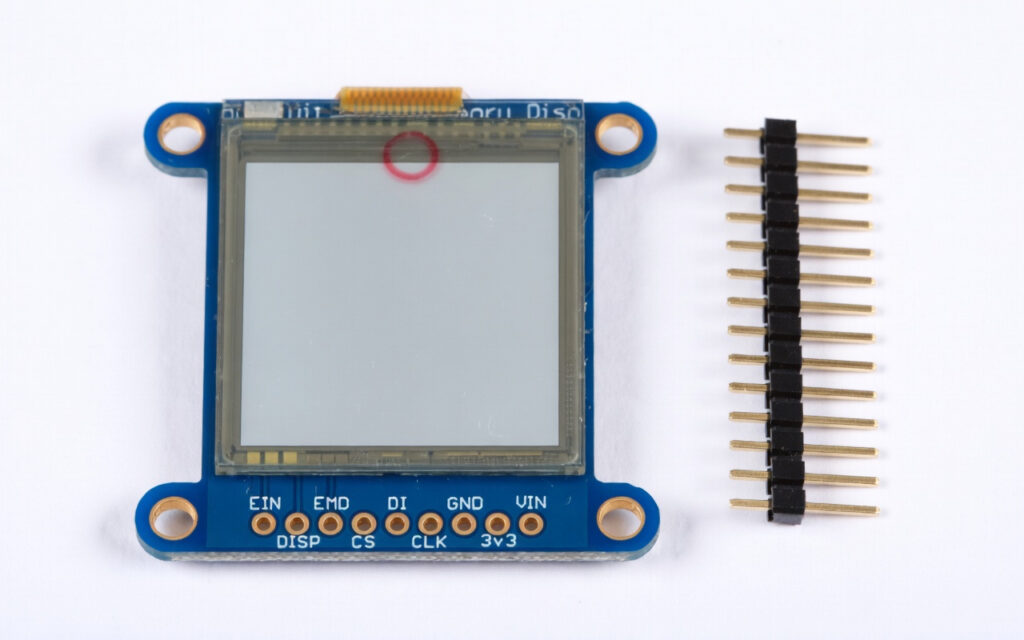
One of the most transformative advancements is Memory-in-Pixel (MIP) LCD technology, pioneered by Sharp and refined by manufacturers like Kyocera. Unlike traditional TFT LCDs requiring constant pixel refreshing (typically 60 Hz), MIP embeds a one-bit SRAM memory circuit directly into each pixel. This allows each pixel to independently store its display data, eliminating the need for ongoing external memory or frequent refreshes.
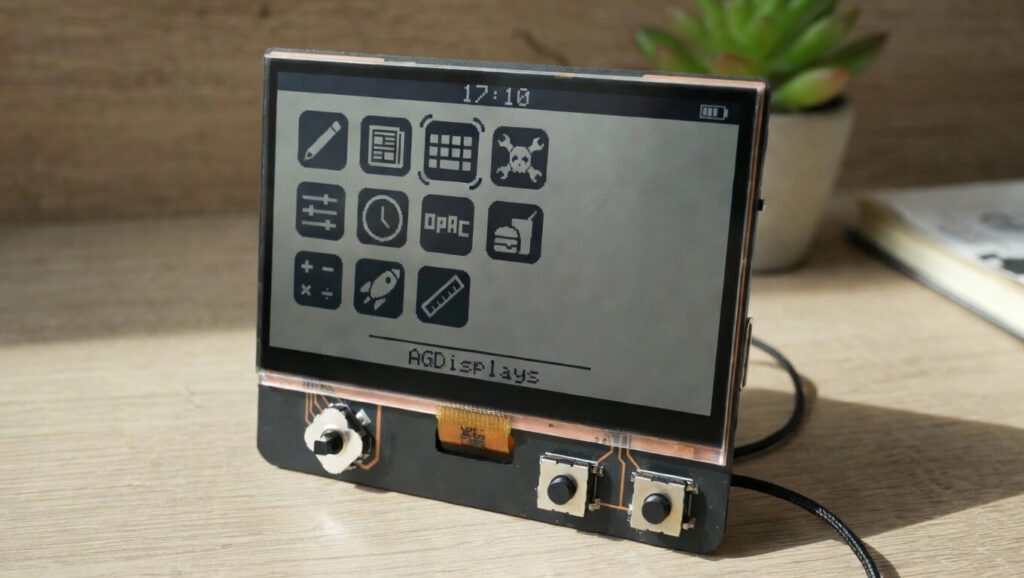
As Sharp confirms, MIP requires just 1/1000th the power of a standard AM-TFT LCD and 1/40 to 1/80th that of older STN-LCDs, with real modules achieving as low as 5–10 µW for static images (or 32 µW typical for 64-color variants during updates). MIP displays achieve high reflectivity (up to 20%+), excellent contrast in ambient light, and no backlight requirement for daylight viewing. Pixel pitches support crisp graphics at wide viewing angles, with response times in milliseconds—far faster than e-paper—allowing scrolling text, simple animations, or low-frame-rate updates when needed.
Recent 2025–2026 developments have expanded MIP’s reach: modules up to 6 inches in monochrome or multi-color variants, integration with quantum-dot elements, and adoption in rugged outdoor devices where sunlight readability is paramount. In wearables and field devices, MIP delivers high contrast and superior outdoor visibility without the burn-in risks or poor sunlight performance associated with some AMOLED alternatives.
For battery-powered rugged devices, this is revolutionary. A field technician’s handheld can display maps, checklists, or schematics all day—or longer—on a small coin-cell or energy-harvesting source. Military operators gain always-on status indicators or low-power HUD overlays that survive weeks without recharging. Industrial IoT sensors in remote sites monitor conditions indefinitely under solar trickle charging. MIP panels also handle shock, vibration, and wide temperature ranges robustly, integrating seamlessly with AGDisplays’ ruggedization processes like optical bonding, heater films, and EMI shielding.
Breakthrough 2: Transflective and Reflective Enhancements — Harnessing Ambient Light
Complementing MIP, transflective LCDs push low-power efficiency further by blending transmissive (backlit) and reflective modes. A semi-reflective layer behind the LC cell reflects ambient light back through the panel, minimizing or eliminating backlight use in bright conditions. The transflective TFT LCD market itself is projected to grow from USD 3.72 billion in 2026 to USD 5.89 billion by 2034 at a 6.1% CAGR, driven precisely by these outdoor and power-saving benefits.
In direct sunlight—where transmissive LCDs fail—transflective panels improve visibility while consuming a fraction of the power. Adaptive controllers tied to ambient light sensors dim or disable backlights when sunlight suffices, extending battery life 3–5x (or more) in outdoor/field scenarios versus pure transmissive designs. Recent trends emphasize these enhancements in rugged tablets, marine navigation, construction equipment, and defense computers.
AGDisplays enhances transflective panels with optical bonding (reducing internal reflections), anti-glare/anti-reflective cover glass, high-brightness LED arrays tuned for day/night transitions, and NVIS compatibility (MIL-STD-3009) for night-vision goggle use—all without inflating power budgets. This hybrid approach is especially valuable in logistics and agricultural HMIs where devices face variable lighting but must conserve every milliwatt.
Breakthrough 3: IGZO TFT Backplanes — Lower Leakage, Higher Efficiency
The TFT layer has evolved dramatically with Indium Gallium Zinc Oxide (IGZO) replacing amorphous silicon (a-Si). IGZO delivers 20–50x higher electron mobility, drastically lower off-state leakage current, and high uniformity—enabling variable refresh rates down to 1 Hz (or lower) without flicker, smaller transistors for brighter images at lower backlight power, and pause/drive modes that cut consumption 30–60% (with some implementations reaching 30–40% overall savings versus a-Si).
2025–2026 implementations highlight IGZO’s ultra-low standby power, with the ability to retain screen data even when powered down in certain configurations. This makes it preferred for next-gen wearables and rugged portables, supporting UHD resolutions, compact pixels, and extended battery life. IGZO’s stability across temperature extremes and compatibility with flexible substrates also opens doors to curved or foldable rugged displays—trends AGDisplays has actively supported.
When layered with MIP or transflective elements, IGZO enables high-resolution panels that sip power while handling dynamic content, touch overlays, and sensor integration in battery-constrained environments.
Breakthrough 4: Mini-LED Backlighting and Intelligent Power Management + Quantum-Dot Enhancements
When backlighting is required, mini-LED arrays (LEDs <200 µm) provide precise local dimming across thousands of zones, boosting contrast and efficiency. In high-brightness rugged panels (1000–5000+ nits), mini-LEDs achieve equivalent luminance with 50–75% less power and lower heat—critical for fanless, sealed enclosures. 2025–2026 advancements include RGB mini-LED architectures delivering up to 30% better energy efficiency in some configurations, AI-driven adaptive algorithms (linked to sensors or edge processors) that optimize dimming dynamically, and integration with quantum dots for wider color gamuts without power penalties.
Quantum-dot (QD) enhancements take this further by improving backlight efficiency and color volume (up to 90–100% DCI-P3) while actually reducing required power per nit. QD films convert blue LED light more efficiently, allowing fewer or lower-power LEDs for the same brightness—especially valuable in medical imaging tablets or military map overlays needing accurate color without sacrificing battery life.
These integrate perfectly with AGDisplays’ custom controllers for seamless day/night/NVIS modes.
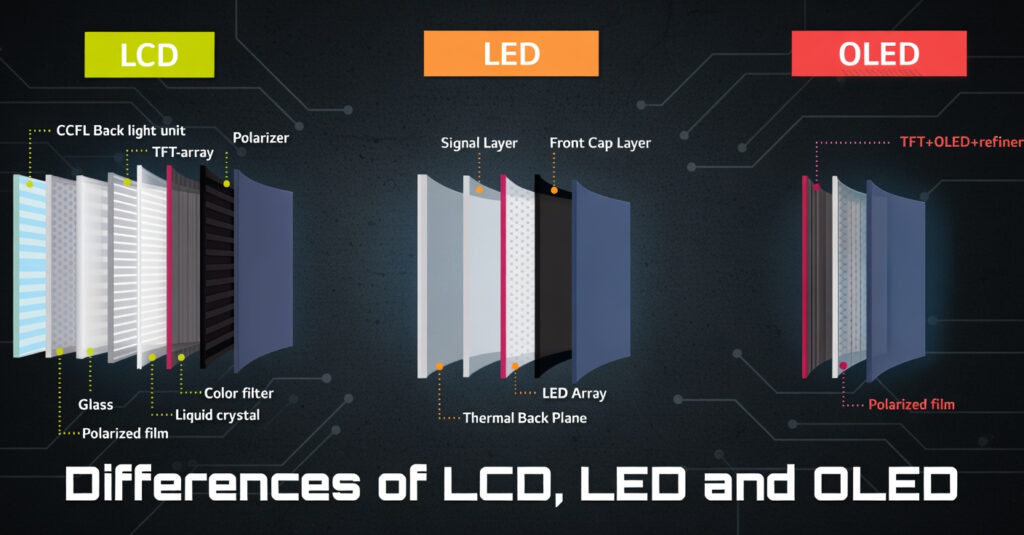
Power Consumption Benchmarks: Side-by-Side Comparison
To put these advancements in perspective, here’s a real-world comparison based on 2025–2026 panel data (typical 5–7 inch rugged modules on a 5000 mAh battery):
| Technology | Static Power (Image Held) | Dynamic/Update Power | Approx. Battery Runtime (Mixed Use) | Sunlight Readability |
|---|---|---|---|---|
| Standard a-Si TFT + LED | 200–400 mW | 400–600 mW | 8–12 hours | Poor |
| IGZO TFT + Mini-LED | 80–150 mW | 150–300 mW | 18–36 hours | Good |
| Transflective Hybrid | 50–120 mW | 100–250 mW | 24–48 hours | Excellent |
| MIP (Reflective) | 5–10 µW | 50–100 mW | Weeks to months | Outstanding |
| MIP + IGZO + Mini-LED Hybrid | 10–30 µW | 80–200 mW | 3–10x extension vs. standard | Outstanding |
These numbers translate directly to 3–10x longer field operation, smaller battery packs, and reduced weight—critical for portable rugged gear.
Market Growth and Industry Adoption of Low-Power Rugged LCDs
The rugged display sector’s expansion (now tracking 6–8% CAGR depending on segment) is propelled by these low-power technologies. Energy-efficient designs with adaptive features are extending portable device runtime, reducing reliance on bulky batteries, and enabling new use cases like solar-powered remote monitoring. Adoption is accelerating in defense, industrial, healthcare, and outdoor wearables, where MIP, IGZO, and QD-enhanced LCDs deliver sunlight readability and low power without OLED’s drawbacks like burn-in or poor visibility.
AGDisplays’ Approach: Ruggedization Meets Low-Power Innovation
AGDisplays engineers complete solutions. Recent military projects achieved 40% failure-rate reductions through strengthened cover glass, optical bonding, EMI mesh, and dimmable LEDs. We now layer low-power cores—MIP/transflective bases, IGZO backplanes, mini-LED + QD drivers—plus full-stack features like projected capacitive touch, heaters, and EOL panel bridging. The result: devices lasting days or weeks longer while surviving MIL-STD-810G, wide temperatures, and sunlight.
Real-World Applications and Quantifiable Benefits
- Military/Defense: MIP/IGZO handhelds and drone controllers deliver 10x battery life for status screens while maintaining NVIS compatibility.
- Industrial Field Service: Oil/gas/utility tablets display schematics shift-long without recharge, cutting downtime 20–30% and weight 20–40%.
- Medical Mobility: Portable monitors run extended rounds with antimicrobial enhancements.
- Logistics & IoT: Always-on tags/sensors last months on tiny batteries or harvest energy.
- Outdoor Wearables & Marine: Transflective MIP modules in field watches or navigation units provide all-day readability in sunlight.
Customers consistently report 3–10x battery extensions, superior reliability, and lower ownership costs.
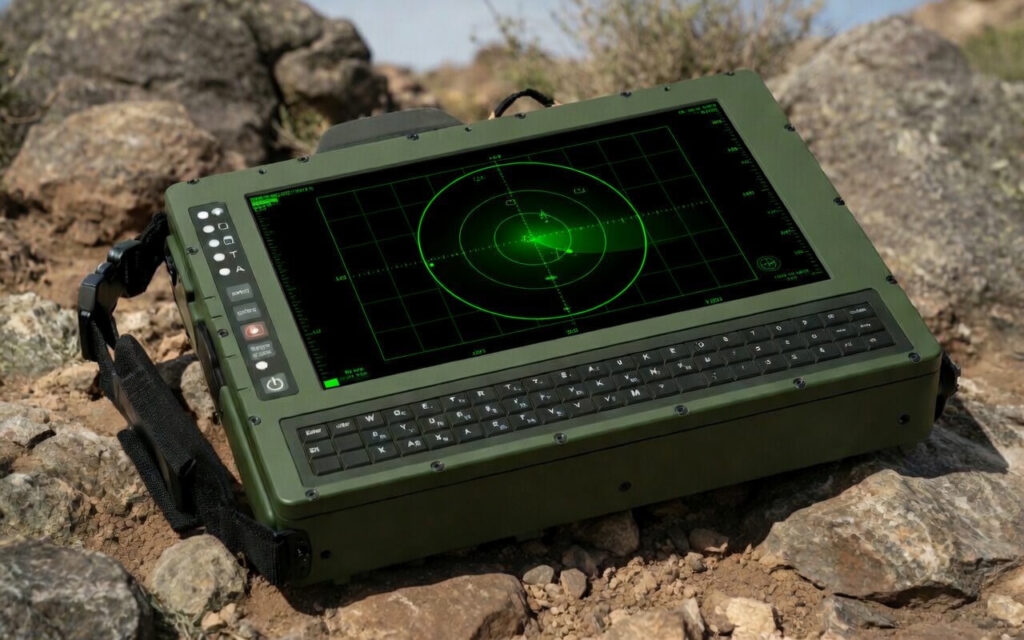
Integration with Energy-Harvesting Sources in Rugged Environments
Low-power LCDs shine brightest when paired with ambient energy sources. MIP and transflective panels consume so little that solar cells (even small 1–2 W panels), vibration harvesters on vehicles, thermoelectric generators in extreme temps, or RF harvesting from nearby transmitters can keep devices running indefinitely. AGDisplays has deployed solar-ready rugged tablets in remote oil/gas sites and military forward bases that achieve “effectively infinite” runtime during daylight hours—no battery swap required for weeks. This combination turns field devices into truly autonomous assets.
Touch, Sensor, and HMI Integration Without Power Penalties
Advanced HMIs no longer drain batteries. Projected-capacitive touch layers, force-sensing, ambient-light/proximity sensors, and edge-AI overlays are optimized for low-refresh IGZO/MIP panels using scan-rate reduction during static periods. AGDisplays’ custom controllers keep total system power under 300 mW even with continuous touch monitoring—enabling intuitive operator interfaces in industrial tablets or medical devices without compromising the ultra-low-power core.
Thermal Management Strategies for Low-Power + High-Brightness Designs
Mini-LED local dimming alone can cut heat generation 40–60%, while IGZO’s efficiency reduces overall thermal load. AGDisplays pairs these with optimized heater films (for cold starts), passive thermal spreading, and sealed IP67+ enclosure designs. Lab testing under MIL-STD-810 thermal shock shows junction temperatures staying well within safe limits even at 5000 nits—preventing derating and ensuring long-term reliability in desert or arctic deployments.
Certification Pathways: MIL-STD-810, DO-160, NVIS, and IEC 60601 for Low-Power Panels
Lower power actually simplifies certification. Reduced refresh rates mean lower EMI (easier MIL-STD-461 compliance), while efficient backlighting eases thermal and power-budget testing in DO-160 aerospace and IEC 60601 medical standards. MIP/IGZO panels routinely pass 30g shock with zero image retention loss and maintain NVIS Class A/B compatibility. AGDisplays provides full certification support and test reports, accelerating time-to-market.
Challenges and Trade-Offs (with Solutions)
MIP excels for static content but dynamic video benefits from IGZO/mini-LED hybrids. Custom ruggedization adds upfront cost, yet volume efficiencies and longer lifecycles offset this. Thermal and certification hurdles are addressed through the strategies above.
End-of-Life (EOL) Panel Management for Low-Power Rugged Displays
AGDisplays’ signature strength shines here. Low-power MIP/IGZO designs are future-proofed with pin-compatible drop-in replacements, firmware-updatable controllers, and 10+ year supply guarantees. Unlike fast-evolving OLEDs, these LCD architectures minimize obsolescence risk—customers simply swap panels without redesigning enclosures or software.
Customer ROI Calculator & Fleet-Level Case Study
Consider a 200-unit military field-computer fleet using standard TFTs: annual battery/replacement/downtime costs ≈ $250K. Switching to MIP/IGZO hybrids delivers 5x battery life, 35% weight reduction, and 40% fewer failures. Result: ~$180K annual savings (calculated as: battery cost reduction + 30% downtime savings + extended service intervals). Payback period is typically 12–18 months. Use our simple formula: (Extended Runtime Hours × Fleet Size × Hourly Downtime Cost) + Battery Savings = Total ROI.
Sustainability and ROI Benefits
Lower power enables smaller batteries, reducing lithium and rare-earth usage while extending device lifecycles—aligning with eco-friendly manufacturing. ROI calculations show clear payback via reduced replacements, downtime savings, and energy costs.
Practical Implementation Guide for OEMs
- Assess content type (static vs. dynamic) to choose MIP vs. IGZO base.
- Specify transflective + QD layers for outdoor use.
- Integrate mini-LED with custom controllers and energy-harvesting.
- Add touch/sensor HMI with low-scan optimization.
- Request MIL-STD testing, thermal validation, and EOL bridging from partners like AGDisplays.
- Prototype and calculate fleet ROI early.
The Road Ahead: Toward Even Lower Power and Smarter Integration
Into 2026 and beyond, hybrid MIP + RGB mini-LED + QD panels, AI-optimized management, 6G edge computing for remote diagnostics/AR overlays, and flexible LCD expansions will dominate. Low-power advanced LCDs will retain strong market share in rugged segments where OLEDs falter on longevity and readability.
Conclusion: Choose LCDs Engineered for the Long Haul
Battery-powered rugged devices no longer have to compromise between performance and endurance. MIP memory tech, transflective optics, IGZO efficiency, mini-LED intelligence, QD color boosts, and seamless integration with harvesting, touch, and certification pathways—bolstered by 2025–2026 market advancements—make LCDs more viable than ever in the harshest environments.
At AGDisplays, we transform these breakthroughs into field-ready, custom ruggedized, sunlight-readable, ultra-low-power solutions that keep operations running longer and safer.
Ready to extend battery life in your next rugged project? Contact our engineering team today for a consultation, configurator demo, or custom design session. From drop-in MIP modules to fully customized MIL-STD solutions with mini-LED, IGZO, QD, and energy-harvesting integration, we’ll specify the optimal low-power LCD design tailored to your exact application and environmental demands.