

One unique technology that consistently delivers exceptional performance across variable lighting conditions is the transflective LCD (also known as transreflective). This hybrid display bridges the gap between traditional transmissive and reflective displays, providing reliable readability from total darkness to intense direct sunlight while prioritizing energy efficiency and durability.
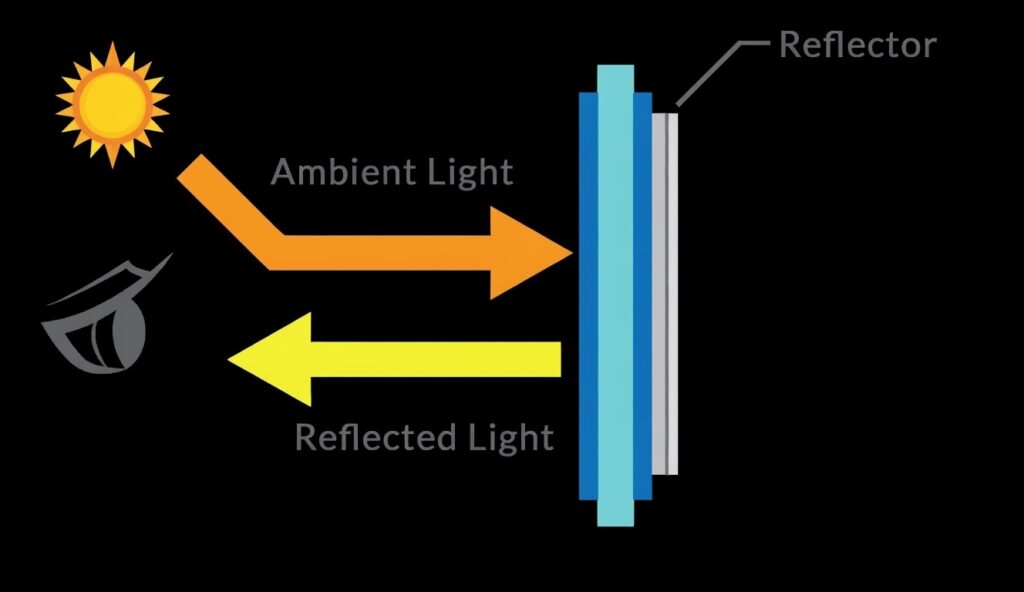
Transflective LCDs incorporate a semi-reflective (transflective) layer that allows the display to dynamically switch between utilizing ambient light for reflection and a backlight for transmission. In bright outdoor settings, ambient light reflects off the layer to illuminate the pixels, reducing or eliminating the need for the backlight. In low-light or indoor scenarios, the backlight activates to transmit light through the panel. This dual-mode capability offers profound technical advantages, making transflective LCDs a preferred choice for mission-critical, battery-powered, or harsh-environment systems.
Understanding the Core Structure of Transflective LCDs
A typical transflective LCD builds upon the standard TFT-LCD foundation but incorporates a critical additional element: the transflector (semi-reflective layer). This layer allows the display to operate in both reflective and transmissive modes seamlessly. Here’s a detailed breakdown of the key layers, from front to back:
- Front polarizer — Usually a linear polarizer that filters incoming light to a specific polarization orientation. In color displays, this is often combined with or positioned near the color filter array (RGB subpixels) to produce vibrant images.
- Color filter layer (in color TFT displays) — A patterned array of red, green, and blue filters aligned with subpixels to create full-color reproduction. This layer is typically on the front glass substrate.
- Front glass substrate with ITO (Indium Tin Oxide) electrodes — Provides transparent conductive paths for applying voltage to control the liquid crystals.
- Liquid crystal (LC) layer — The heart of the display. Nematic liquid crystals (often twisted nematic or in-plane switching types) are sandwiched between alignment layers. When voltage is applied via the TFT array, the LC molecules twist or align, modulating the polarization of light passing through them to control pixel brightness and color.
- TFT array layer (Thin-Film Transistor backplane) — Deposited on the rear glass substrate, this consists of amorphous silicon transistors, storage capacitors, and data/gate lines. Each subpixel has its own TFT for precise control, enabling high-resolution active-matrix operation.
- Semi-reflective transflector layer — This is the defining feature of transflective technology. Positioned behind the LC layer (often integrated into the rear polarizer or as a separate patterned film), it reflects approximately 50-70% of incident ambient light while transmitting the remaining portion from the backlight. Common implementations include:
- Patterned metal reflectors (e.g., aluminum or silver micro-mirrors in specific pixel areas, dividing each subpixel into reflective and transmissive zones).
- Continuous semi-transparent films (e.g., thin metal layers or dielectric mirrors that achieve partial reflectivity without patterning).
- Polymer-based films with embedded reflective particles.
The patterning approach is prevalent in high-performance displays, as it allows optimization of the reflective area (typically larger for better sunlight performance) versus transmissive area.
- Rear polarizer — Crossed relative to the front polarizer (e.g., one vertical, one horizontal) to create the basic light-blocking mechanism when LC molecules are untwisted.
- Backlight unit — An LED array (edge-lit or direct-lit) providing illumination for transmissive mode. In transflective designs, the backlight can operate at lower intensity or be dimmed/off in bright conditions.
This stacked structure is assembled between two glass substrates (typically 0.5-0.7 mm thick each), with the entire panel sealed and filled with LC material.
Reflective Mode (Dominant in Bright Ambient Light):
Ambient light (e.g., sunlight) enters from the front, passes through the front polarizer (polarized), then through the color filter and LC layer. Upon reaching the transflector, a significant portion reflects back. The reflected light travels through the LC layer again (doubling the modulation path), through the color filter, and out the front polarizer to the viewer. This double pass through the LC enhances contrast in bright conditions, as the effective path length increases light modulation. The transmissive portion of the transflector allows minimal backlight leakage but is negligible when ambient light dominates. As a result, the display becomes brighter and more readable as ambient illuminance increases—often achieving effective luminance gains without additional power.
Transmissive Mode (Dominant in Low or No Ambient Light):
The backlight illuminates from behind. Light passes through the rear polarizer, the transflective layer (transmitted portion), the LC layer (modulated once), the color filter, and the front polarizer to reach the viewer. This path mirrors a standard transmissive LCD, ensuring consistent indoor or nighttime performance. Automatic sensors or firmware can adjust backlight intensity based on ambient conditions for optimal efficiency.
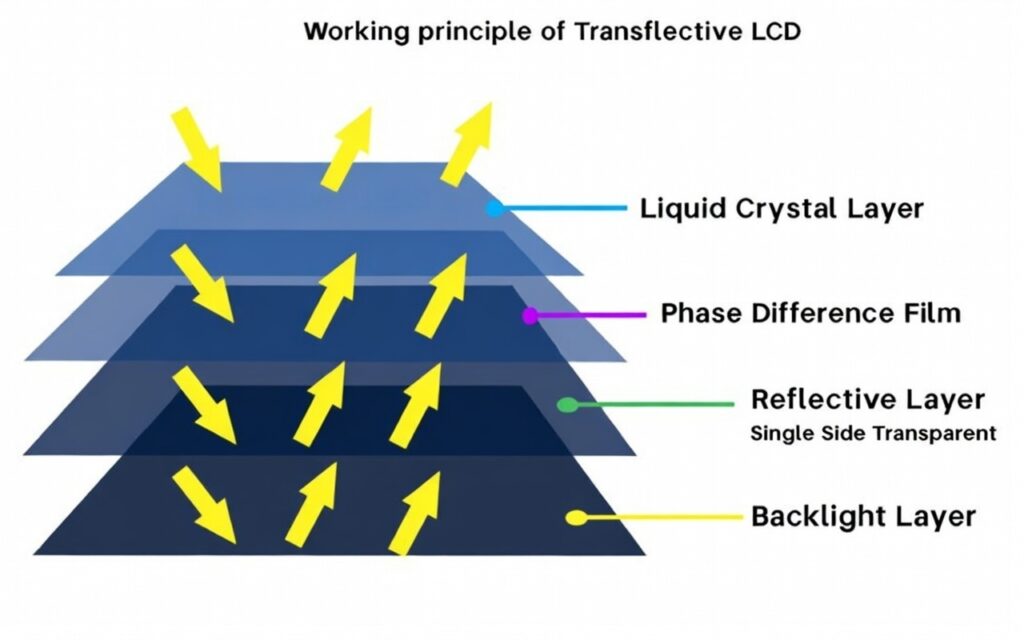
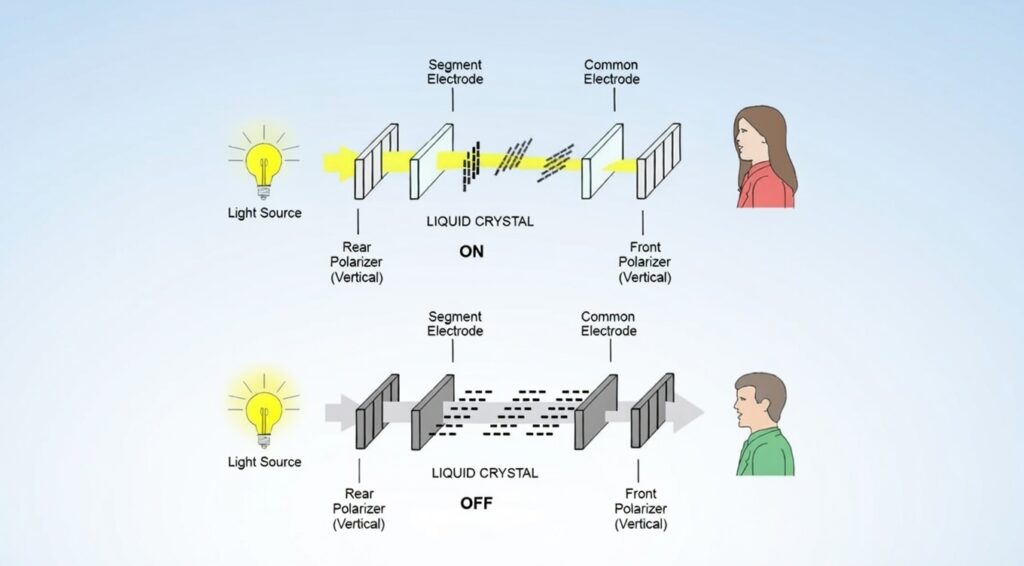
The dual-pass nature in reflective mode introduces some unique considerations: slight reductions in color saturation or viewing angle compared to pure transmissive (due to the double LC traversal), but modern designs with retardation films (phase difference layers) and advanced LC alignments (e.g., VA or IPS modes adapted for transflective) mitigate this effectively. In ruggedized implementations, we often add optical bonding, anti-reflective coatings, and wide-temperature LC formulations to further enhance performance.
This sophisticated architecture is why transflective LCDs deliver unmatched adaptability—leveraging the environment for illumination in bright settings while falling back to controlled backlight in dim ones. It forms the foundation for the power savings, sunlight readability, and reliability that make these panels ideal for military, industrial, marine, and aerospace applications we support daily.
Outstanding Sunlight Readability and Anti-Washout Performance
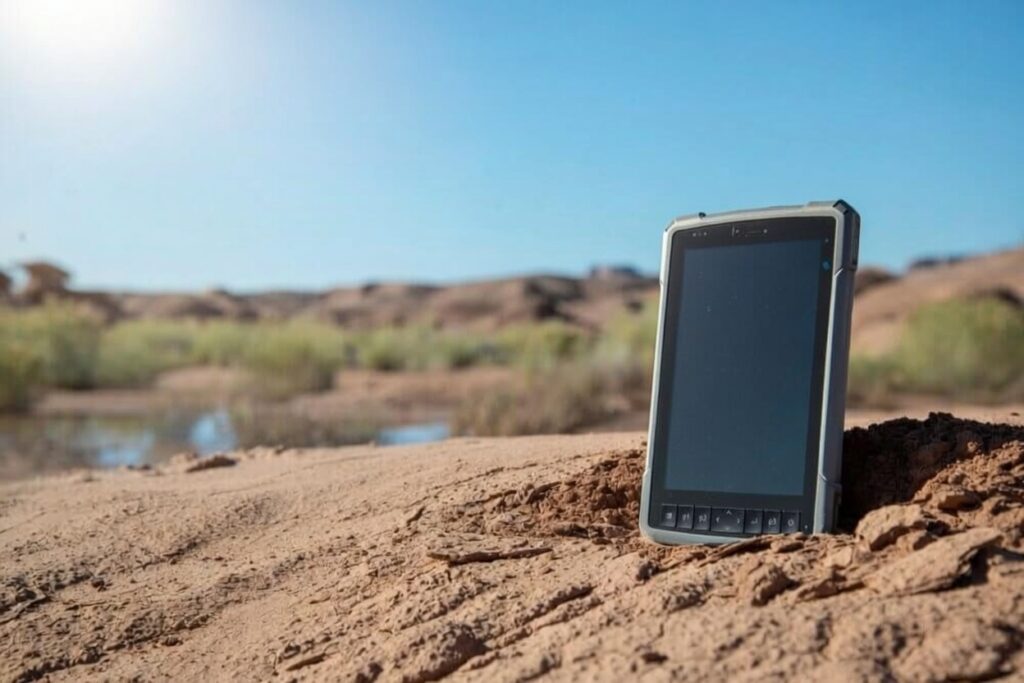
The most prominent benefit of transflective LCD technology is its superior ability to maintain high visibility and legibility under direct sunlight, where traditional transmissive LCDs frequently suffer from severe “washout.” Washout occurs when intense ambient light overwhelms the display’s emitted luminance, causing reflected glare to dominate and reduce perceived contrast to unusable levels—often dropping effective contrast ratios below 2:1 or even 1:1 in extreme conditions.
In direct sunlight, ambient illuminance typically ranges from 50,000 to over 100,000 lux (with peaks exceeding 120,000 lux on clear days). For transmissive LCDs to remain readable in these environments, backlight luminance must exceed 800–1500 cd/m² (nits), and in many cases, 1000–2000 nits or higher for reliable performance. Achieving such high brightness requires powerful LED arrays, advanced thermal management, and robust power supplies, which increase system complexity, heat generation, component stress, and overall energy consumption.
Transflective panels address this challenge fundamentally differently by leveraging ambient light as an active illumination source rather than competing against it. The semi-reflective transflector layer (typically reflecting 50–70% of incident light, with true internal transflective designs achieving reflectance rates of 2–7% or higher depending on patterning) captures external light entering the front of the display. This light passes through the liquid crystal layer, reflects off the transflector, and returns through the LC layer again (creating a double-pass modulation path), before exiting to the viewer.
As ambient illuminance increases, the reflected light contribution grows proportionally, providing an effective “auto-brightness” boost. For instance, under 10,000 lux, even modest reflectance can add hundreds of effective nits to the display’s perceived brightness without any additional backlight power. In full direct sunlight (e.g., 80,000–100,000 lux), this can result in effective luminance contributions far surpassing what moderate backlights provide, often making the display appear brighter and more vivid as conditions worsen for transmissive alternatives.
This mechanism dramatically improves contrast ratios outdoors. While transmissive displays may see their effective contrast plummet to <5:1 (or even <2:1) due to specular reflections and diffuse ambient light washing out blacks, transflective designs enhance black levels through the reflective path. The double-pass through the LC layer increases light modulation efficiency, and the reflective component reduces internal reflections and glare. Many optimized transflective implementations achieve effective outdoor contrast ratios exceeding 10:1, with some reaching 15:1 or higher when paired with anti-reflective coatings or optical bonding—far surpassing transmissive panels operating at standard or even elevated backlight levels.
Additional factors amplify this performance:
- Glare reduction — The reflective mode naturally counters specular highlights from sky, water, or metallic surfaces common in marine, aerospace, and outdoor industrial settings.
- No dependency on extreme backlighting — Avoiding high-nits LEDs eliminates hotspots, uneven luminance, and accelerated LED degradation.
- Complementary enhancements — At AGDisplays, we frequently combine transflective panels with optical bonding (which eliminates air gaps to reduce internal reflections by up to 99%), anti-glare/anti-reflective surface treatments, and wide-viewing-angle LC modes (e.g., IPS or VA adaptations) to further boost effective contrast and readability from off-axis angles.
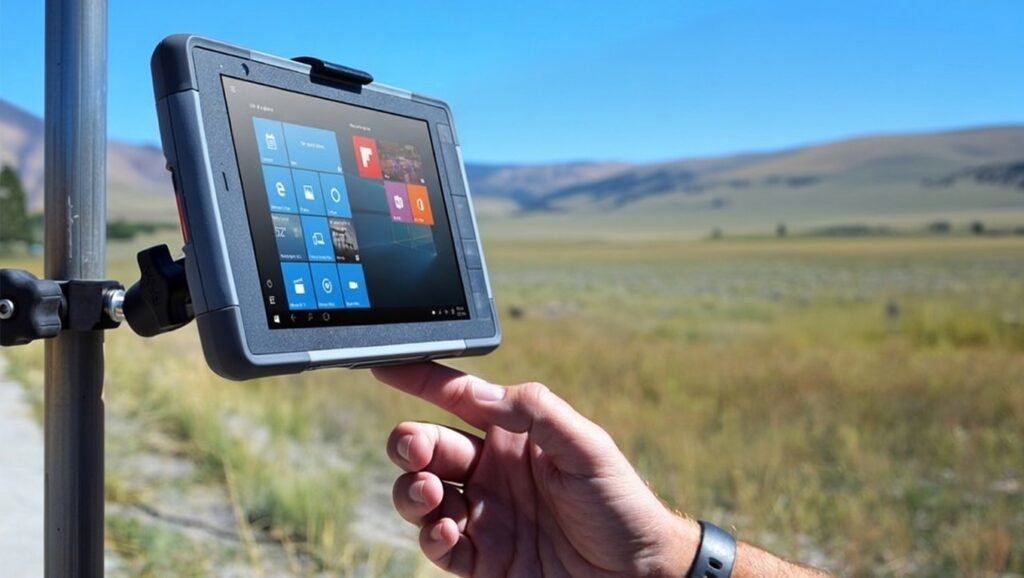
Real-world testing and industry benchmarks confirm these advantages. Side-by-side comparisons under strong sunlight often show transmissive displays appearing faded or illegible, while transflective counterparts remain sharp and color-accurate. This makes transflective technology particularly ideal for:
- Outdoor human-machine interfaces (HMIs) in manufacturing or construction equipment.
- Military handheld devices and vehicle-mounted displays for field operations.
- Marine navigation instruments exposed to bright deck conditions and water glare.
- Aerospace cockpit or ground support systems transitioning through variable lighting.
Dramatic Power Efficiency and Battery Life Extension
In virtually every LCD-based system, the backlight is the single largest power consumer—typically accounting for 60–80% (and sometimes up to 90% in high-brightness configurations) of the total display module power draw. Traditional transmissive LCDs must keep this backlight active at all times, and in outdoor or high-ambient-light applications, they often require 800–2000+ cd/m² luminance levels to remain readable. This forces the backlight to operate at maximum or near-maximum intensity for extended periods, dramatically increasing energy demands, generating excess heat, and accelerating component wear.
Transflective LCDs fundamentally change this equation by treating ambient light as a free illumination resource. In bright conditions (typically >5,000–10,000 lux and higher), the reflective portion of the transflector dominates, allowing the backlight to be heavily dimmed or switched off completely while maintaining—or even improving—perceived brightness and contrast. Industry data consistently shows that this can reduce total display power consumption by 70–90% in outdoor daylight scenarios compared to an equivalent high-brightness transmissive panel running at full backlight intensity.
To put real numbers behind this:
- A typical 7–10 inch high-brightness transmissive TFT (1000–1500 nits) used outdoors might consume 8–15 W or more just for the backlight under full load.
- The same size transflective panel, relying primarily on reflective mode, can drop backlight power to under 1–2 W (or near zero when fully off), bringing total module consumption down to 2–4 W or less in bright sunlight.
- In pure reflective operation, power draw can approach that of reflective-only displays—sometimes as low as 0.3–0.5 W for the logic and driver circuitry alone—yielding savings that exceed 90% versus a constantly illuminated high-nits backlight.
These savings translate directly into dramatically extended battery life for portable and field-deployed devices:
- Military handheld computers, dismounted soldier systems, and tactical tablets that previously lasted 4–8 hours on a charge can achieve 12–24+ hours (or more) when operating outdoors with transflective displays.
- Industrial PDAs, barcode scanners, and portable test equipment used in warehouses, construction sites, or utility fieldwork routinely see runtime doubled or tripled during daylight shifts.
- Remote environmental monitors, GPS survey units, and marine portable navigation devices—often battery- or solar-powered—gain days or weeks of additional operational time.
Even in mixed or variable lighting environments (the reality for most real-world deployments), modern transflective implementations incorporate intelligent ambient light sensors (ALS) and adaptive backlight control algorithms. These systems dynamically adjust backlight intensity in real time—often reducing power by 40–60% on average across a typical duty cycle—without any perceptible loss in readability. At AGDisplays, we frequently integrate advanced ALS drivers and firmware that allow backlight levels to drop below 5–10% in moderate-to-bright conditions, further optimizing efficiency.
The secondary benefits of reduced backlight usage are equally significant for long-term reliability:
- Lower thermal output: High-brightness backlights can elevate internal panel temperatures by 20–40°C, stressing liquid crystals, polarizers, and adhesives. Transflective designs run cooler, improving performance in already hot environments (deserts, engine compartments, direct sun exposure) and reducing thermal-related failures.
- Extended LED backlight lifespan: LED degradation follows an exponential curve with current and temperature. Cutting average backlight duty cycle from 100% to 20–30% (or less) routinely pushes MTBF from 50,000–70,000 hours to 150,000–300,000+ hours—critical for military programs requiring 10–15 year service life.
- Smaller, lighter power systems: Designers can specify smaller batteries, lower-capacity power supplies, or reduced solar arrays, yielding weight savings that compound in man-portable or vehicle-mounted applications.
This combination of direct power savings and indirect reliability gains makes transflective technology especially valuable in sectors where energy is constrained or resupply difficult:
- Defense and aerospace: Extended mission endurance for dismounted soldiers, UAV ground stations, and cockpit auxiliaries without increasing battery load.
- Industrial IoT and field service: Longer shifts for technicians using rugged tablets in sunlight-exposed plants, refineries, or construction zones.
- Marine and transportation: Reduced drain on vessel or vehicle electrical systems for navigation, fleet management, or dashboard displays.
- Environmental and remote monitoring: Solar-powered weather stations, wildlife trackers, or pipeline sensors that must operate autonomously for months or years.
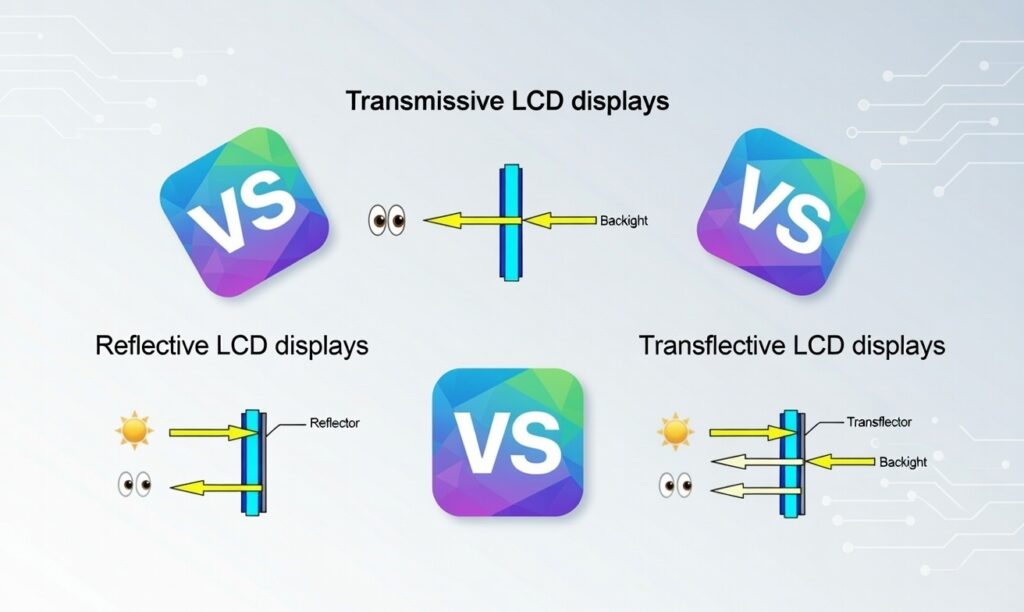
Seamless Adaptability Across All Lighting Environments
Transflective LCDs eliminate the fundamental compromises inherent in single-mode display technologies, delivering consistent, reliable performance from complete darkness to the brightest direct sunlight. This all-conditions capability stems directly from the hybrid reflective/transmissive architecture, allowing the display to intelligently prioritize the optimal light source without mechanical switching, user input, or noticeable performance drops.
Let’s break down the trade-offs of each mode for clarity:
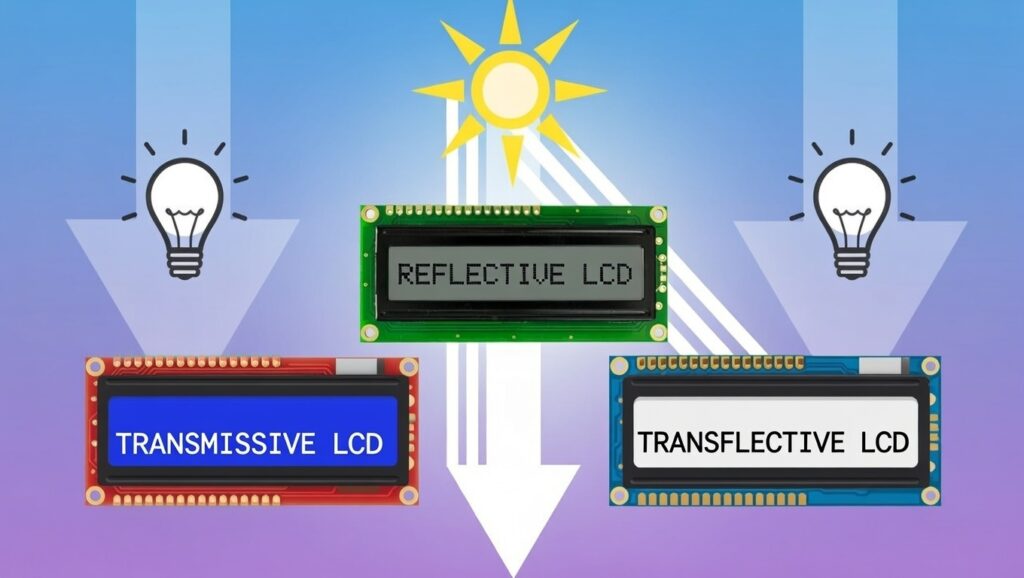
- Pure transmissive LCDs — These are the standard type found in most consumer devices and indoor monitors. They rely entirely on a backlight to push light through the liquid crystal layer toward the viewer. Indoors or in controlled low-light environments (e.g., offices, labs, or night operations with artificial lighting), they offer excellent color accuracy, high contrast, wide viewing angles, and consistent brightness. However, in bright outdoor conditions—where ambient light exceeds 10,000–100,000 lux—the display becomes overwhelmed: external light reflects off the front surface and internal layers, washing out blacks, reducing effective contrast to near-zero, and making content illegible unless the backlight is cranked to extreme levels (often 1000+ nits), which consumes excessive power and generates heat.
- Pure reflective LCDs — Common in early e-ink devices or low-power outdoor signage, these use only ambient light, reflecting it off a rear mirror-like layer back through the LC to the viewer. They excel in bright sunlight, where readability actually improves with increasing illuminance (no washout, natural anti-glare). Power consumption is minimal since no backlight is needed. The critical drawback: in low-light or dark conditions (e.g., indoors at night, tunnels, or after sunset), they become completely illegible without an external light source—there is no built-in illumination path.
- Transflective LCDs — By integrating a semi-reflective transflector layer, these displays combine both worlds into one seamless solution. In bright ambient light, the reflective path dominates: external light enters, reflects off the transflector, and passes through the LC layer twice for enhanced modulation and contrast. As light levels drop, the transmissive path activates progressively—the backlight contributes more until it fully takes over in darkness. The result is a display that remains fully functional and readable across the entire spectrum of lighting conditions, with no dead zones or abrupt failures.
Transitions between modes happen naturally and imperceptibly. There are no moving parts, no manual toggles, and no sudden brightness jumps that could distract operators. Modern implementations often include ambient light sensors (ALS) integrated into the system or display controller, which automatically adjust backlight intensity in fine steps (e.g., from 0% to 100% over a smooth curve). This ensures optimal readability and efficiency without user awareness of the shift—critical in high-stakes environments where attention must remain on the task, not the interface.
This true all-environment adaptability makes transflective technology particularly valuable in dynamic, real-world applications where lighting changes rapidly or unpredictably:
- Aviation and aerospace — Pilots transition frequently between bright exterior views (through cockpit windows in direct sunlight) and shaded or instrument-lit interiors during flight phases, night operations, or cloud cover. Transflective cockpit auxiliary displays or electronic flight bags maintain legibility without forcing high-power backlights that could drain aircraft batteries or create glare distractions.
- Industrial and manufacturing facilities — Workers move between brightly lit outdoor yards, loading docks, or construction sites and dimly lit indoor control rooms, warehouses, or machine shops. Transflective HMIs on portable tablets, fixed panels, or wearable devices ensure uninterrupted visibility for monitoring processes, scanning barcodes, or entering data—no need to pause or adjust settings when stepping through doors.
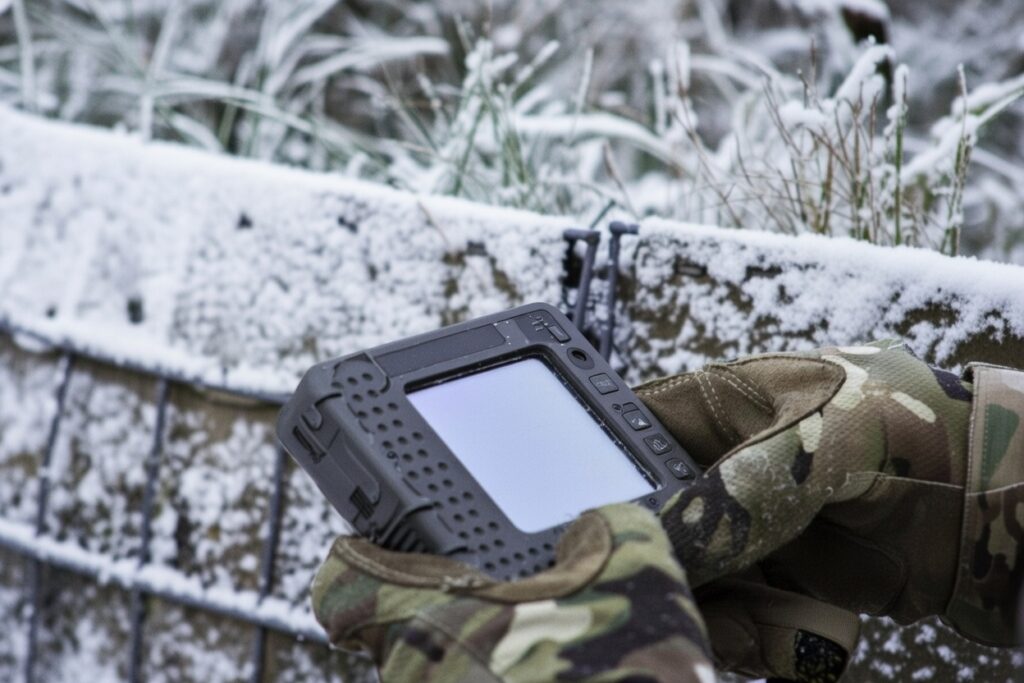
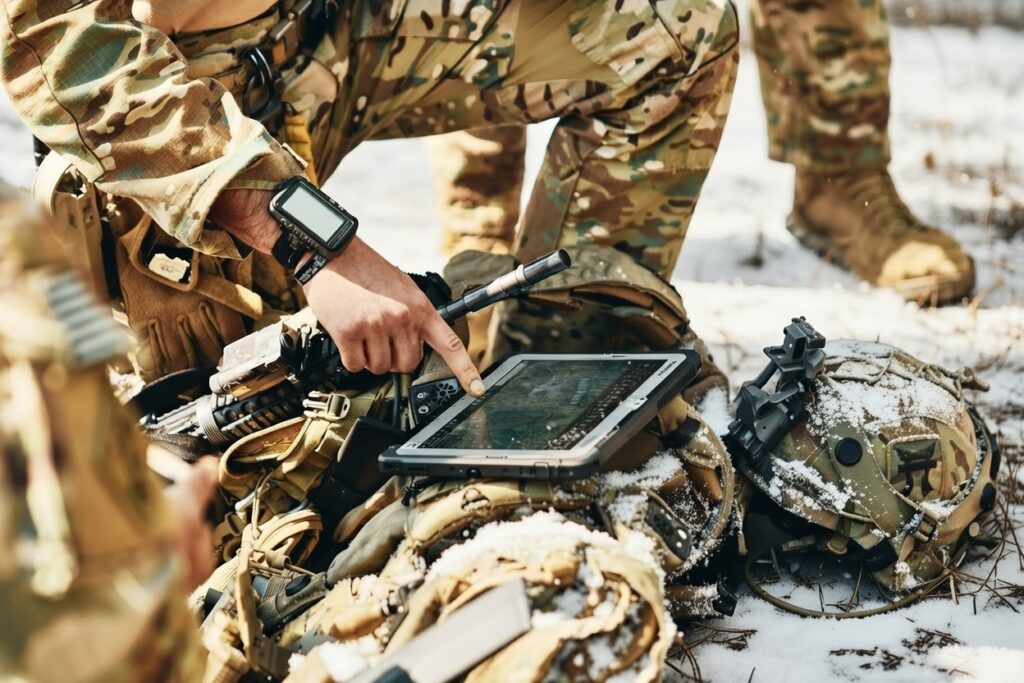
- Military and defense operations — Dismounted soldiers, vehicle crews, or special forces operators encounter extreme variability: full daylight patrols in open terrain, shaded urban environments, vehicle interiors, night missions with NVG-compatible low-light, or complete darkness during stealth ops. Transflective displays on rugged handhelds, vehicle-mounted systems, or weapon sights provide day/night continuity without compromising battery life or adding weight for supplemental lighting.
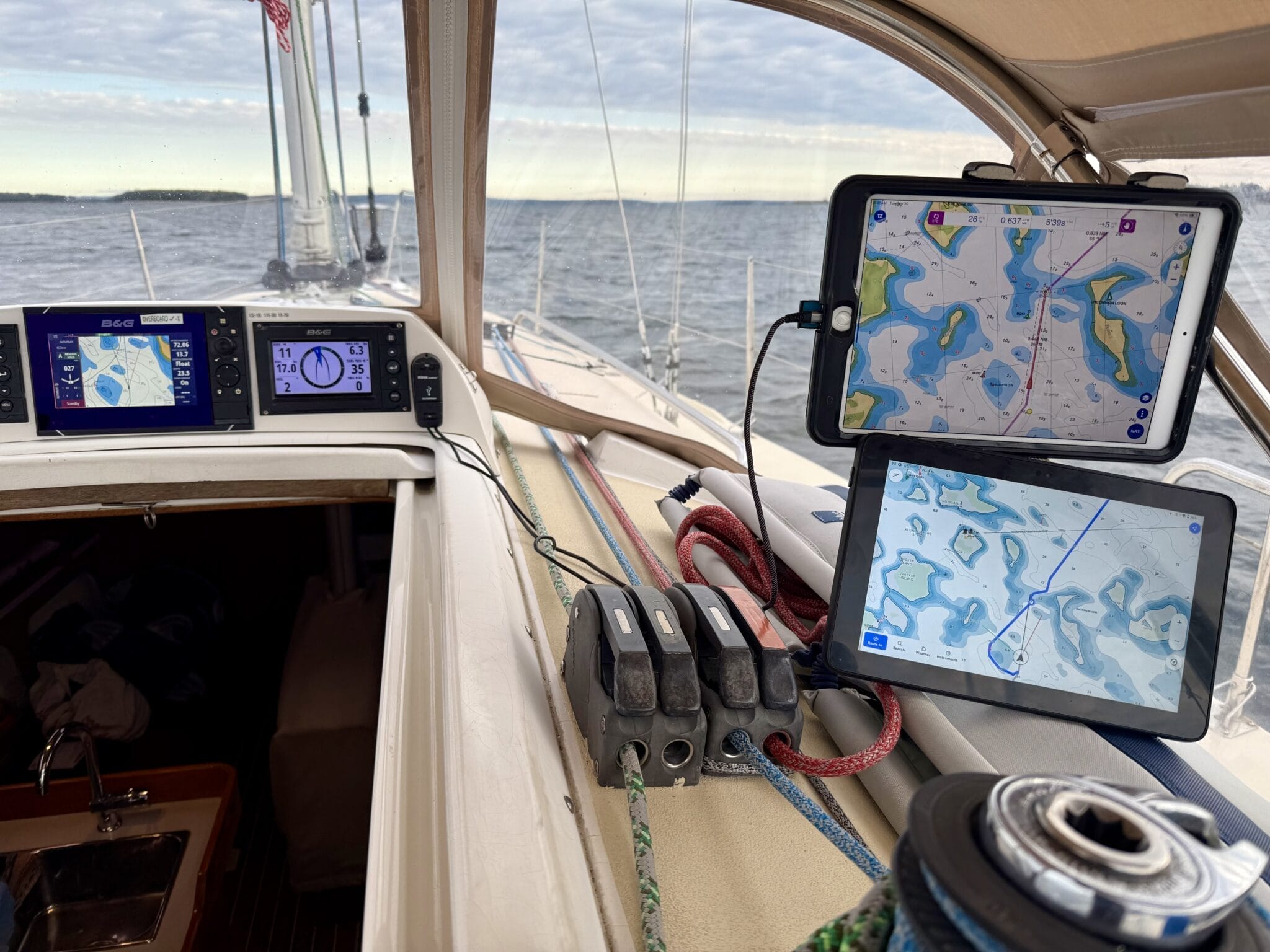
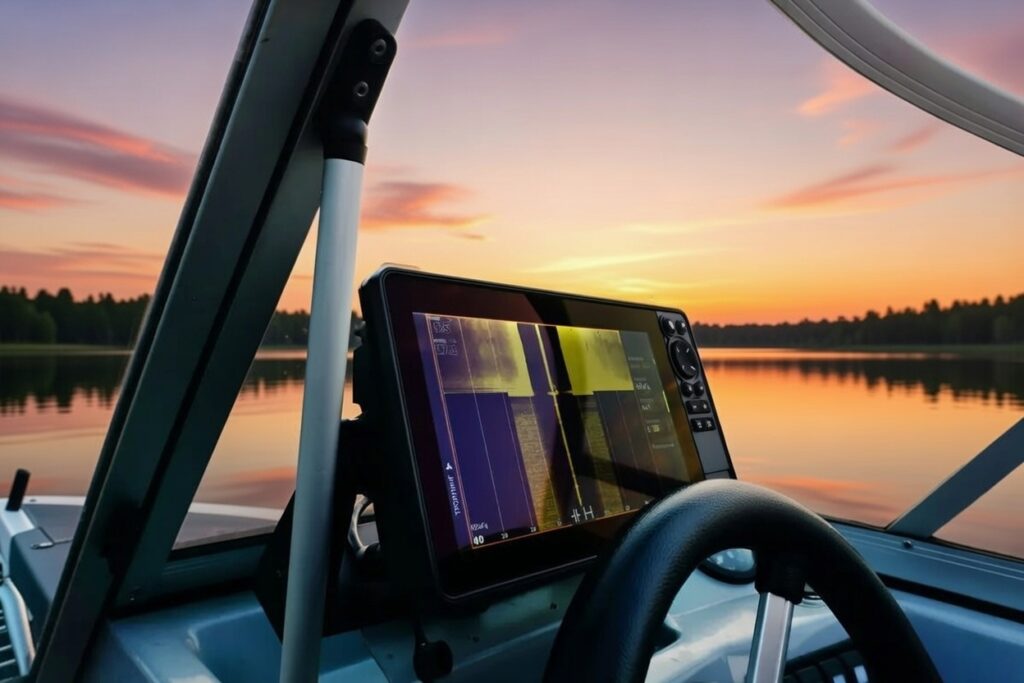
- Marine and transportation — On bright open water (high glare from waves and sky) or in foggy/tunnel conditions, navigation systems, chartplotters, and dashboard displays must adapt instantly. Transflective panels keep critical information visible without excessive power draw on battery-limited vessels or vehicles.
- Outdoor emergency services and field engineering — First responders, surveyors, utility workers, or environmental monitors deal with unpredictable weather and time-of-day changes. A single transflective device serves reliably from dawn patrols in bright sun to nighttime inspections under minimal light.

Enhanced Durability and Ruggedization Compatibility
Transflective LCD panels are inherently well-suited to the demanding requirements of harsh-environment applications, and are routinely paired with a comprehensive suite of rugged enhancements to create displays that not only survive but thrive in extreme conditions. The hybrid nature of transflective technology—relying less on constant high-intensity backlighting—complements these ruggedizations by reducing internal stresses that can accelerate failures in single-mode designs.
Key rugged enhancements include:
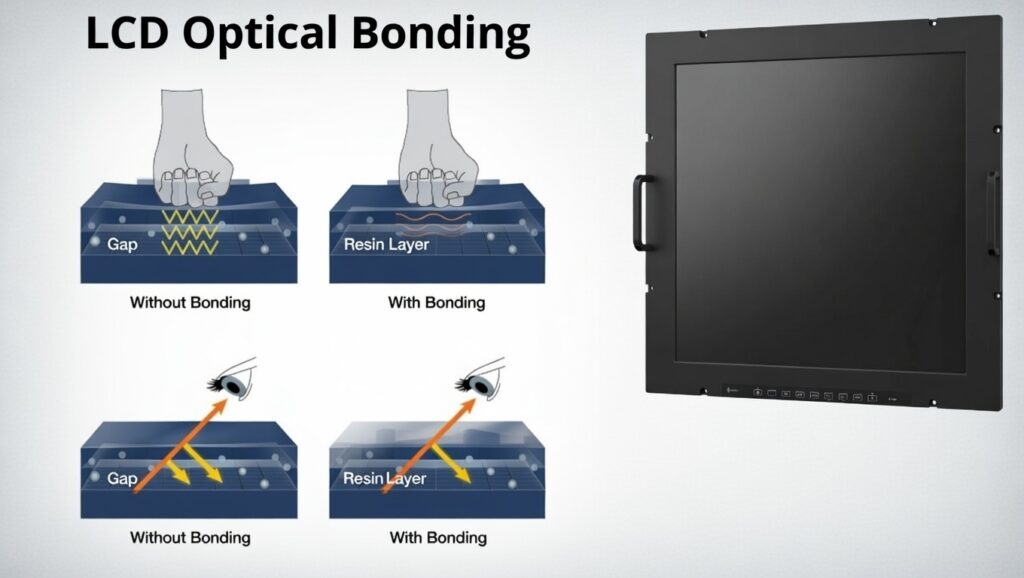
- Optical bonding — This process fills the air gap between the LCD panel, touch sensor (if present), and front cover glass with a clear optical-grade adhesive resin. By eliminating reflections at multiple interfaces (which can reduce contrast by 4-5% per air gap), optical bonding dramatically improves readability in bright conditions and minimizes internal reflections that could otherwise cause ghosting or washout. It also increases structural integrity, providing shock and vibration damping, better thermal conductivity (dissipating heat more evenly), and protection against moisture ingress or delamination in humid or condensing environments. In transflective panels, this enhancement further boosts the effective contrast from the reflective path while maintaining crisp transmissive performance.
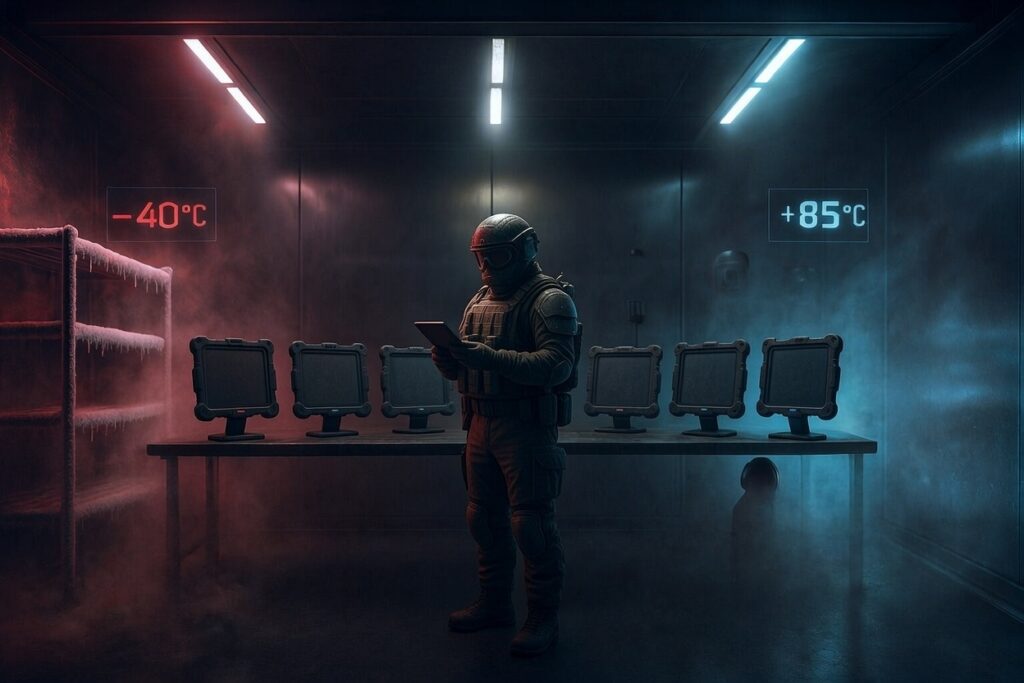
- Wide-temperature operation (-40°C to +85°C or broader) — Standard LCDs often fail or exhibit slow response times, color shifts, or blackening below 0°C or above 60-70°C due to LC fluid viscosity changes. Transflective panels frequently use specialized wide-temp liquid crystals and compensated polarizers, allowing reliable operation across extreme ranges common in military deployments (desert heat, arctic cold), industrial outdoor equipment, or aerospace/avionics. Lower average backlight usage in transflective mode further reduces thermal load, helping maintain performance at temperature extremes without additional cooling.
- Vibration and shock resistance — Vehicle-mounted or man-portable systems experience constant high-frequency vibrations (MIL-STD-810 Method 514) and shocks (Method 516). Transflective panels, with their simpler backlight requirements and reduced heat, experience less thermal cycling stress on solder joints and components. The reflective layer also helps mitigate glare during movement, improving operator focus in bumpy conditions. We reinforce these with chassis-mounted dampers, conformal coatings, and reinforced bezels/frames.
- EMI shielding and reinforced polarizers — For defense and aerospace, electromagnetic interference (EMI) can disrupt operations. We apply conductive films, gaskets, and shielded enclosures to meet MIL-STD-461. Reinforced polarizers (hard-coated, anti-scratch) protect against abrasion in field use.
The lower power draw and reduced heat generation in transflective designs directly contribute to fewer failure modes: LEDs last longer with lower duty cycles, polarizers degrade slower without constant thermal stress, and overall MTBF increases in enclosed, high-ambient-temp setups (e.g., armored vehicle interiors or engine bays). The reflective component inherently reduces specular glare in vibrating environments, making vehicle-mounted displays more usable during rough transit.
These combined attributes ensure transflective solutions align seamlessly with MIL-STD-810 (environmental), MIL-STD-461 (EMI), DO-160 (avionics), and industrial certifications like IP67 sealing or NEMA ratings—making them a cornerstone for our custom rugged display programs.
Cost-Effectiveness and System-Level Savings
While initial panel costs for transflective LCDs can be comparable to or slightly higher than standard transmissive due to the specialized transflector layer, the total system-level and lifecycle costs are often significantly lower—especially when sunlight readability is required.
High-brightness transmissive solutions demand expensive ultra-high-output LED backlights (often 1000-2000+ nits), sophisticated LED drivers, enhanced heat sinks/fans, thicker thermal interfaces, and larger power supplies or batteries to handle sustained high current draw. These add substantial BOM (bill of materials) costs, increase assembly complexity, and require more robust enclosures for thermal management.
In contrast, transflective technology achieves equivalent or superior outdoor performance by leveraging ambient light, allowing use of standard or moderate-brightness backlights (typically 300-800 nits) that are dimmed or off most of the time in daylight. This eliminates:
- Costly high-power LEDs and drivers.
- Complex cooling systems (fans, heat pipes, or oversized sinks).
- Oversized batteries or power subsystems to support peak loads.
For battery-powered or remote devices, smaller batteries reduce weight, volume, and material costs—critical in portable military gear or industrial tools. Reduced power also means simpler power management ICs and fewer thermal protection circuits.
In volume production for defense or industrial sectors, these savings compound:
- Lower component sourcing costs (standard LEDs vs. specialized high-nits arrays).
- Simplified supply chain and assembly (fewer thermal/EMI mitigations).
- Extended product lifecycle with less frequent replacements due to reduced wear.
- Decreased operational expenses (longer battery life = fewer recharges/logistics in field ops).
Industry analyses show transflective approaches can yield 20-50% overall system cost reductions in outdoor/mission-critical applications compared to brute-force high-brightness designs, while delivering better reliability and performance.
Real-World Applications in Demanding Industries
Transflective LCD technology truly comes into its own in industries where displays must perform reliably under unpredictable and often extreme conditions. By providing superior sunlight readability, low power consumption, seamless lighting adaptability, and compatibility with rugged enhancements, transflective panels enable mission-critical operations without the limitations of traditional transmissive or reflective displays.
Here are some of the key sectors where transflective LCDs deliver transformative value:
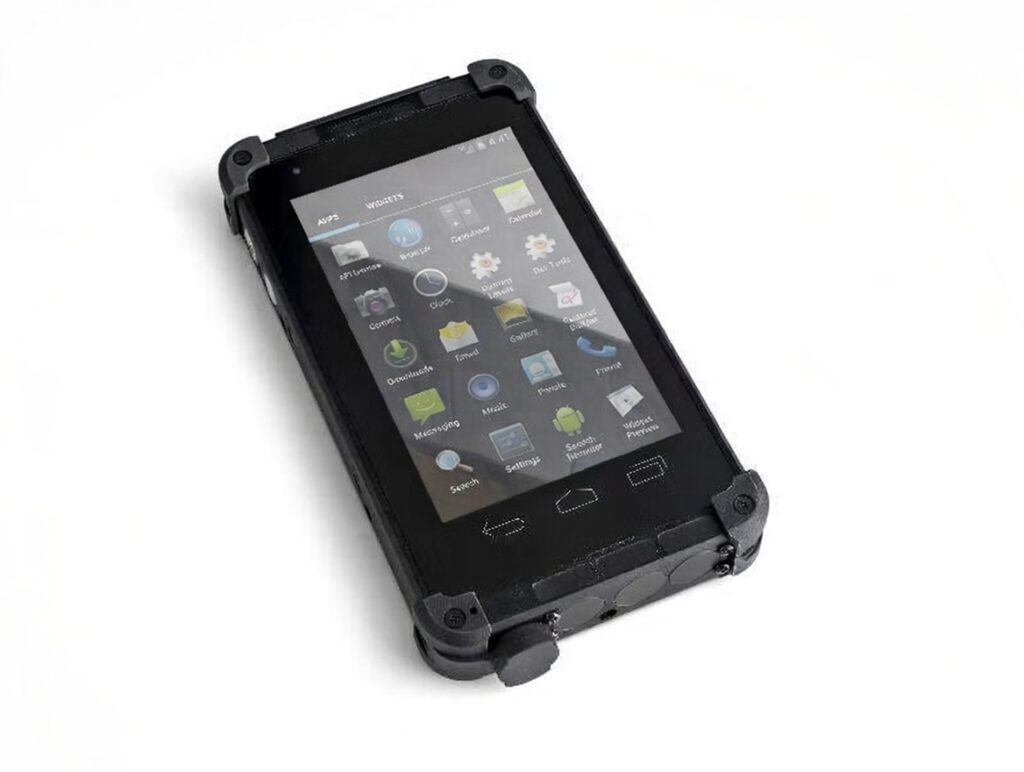
- Military/Defense: In high-stakes field operations, soldiers, vehicle crews, and command teams rely on handheld devices, tablets, and vehicle-mounted displays for situational awareness, mapping, communications, and targeting data. Transflective panels ensure clear visibility during extended daylight patrols in open terrain, desert environments, or urban settings with intense glare, while conserving battery life for multi-day missions without frequent recharges. Low power draw is especially critical for dismounted infantry or remote outposts, and the rugged compatibility supports MIL-STD-810 environmental testing (vibration, shock, temperature extremes) and MIL-STD-461 EMI requirements.
- Industrial/Manufacturing: Factory floors, warehouses, construction sites, and outdoor yards feature rapidly changing lighting—from dim indoor assembly lines to bright sunlight on loading docks. Transflective HMIs, portable scanners, and fixed control panels maintain legibility for operators monitoring processes, entering data, or troubleshooting equipment without pausing to adjust brightness or squint through glare. Power efficiency extends shift life for battery-powered tools, and rugged features like vibration resistance and wide-temperature operation handle the rigors of heavy machinery environments.
- Marine/Transportation: On vessels, bright deck sunlight combined with water glare can wash out standard displays, while tunnels, shaded cabins, or nighttime navigation demand consistent low-light visibility. Transflective chartplotters, multifunction displays (MFDs), and dashboard systems provide reliable navigation data across these transitions, with low power helping conserve battery on smaller boats or extending runtime in remote maritime ops.
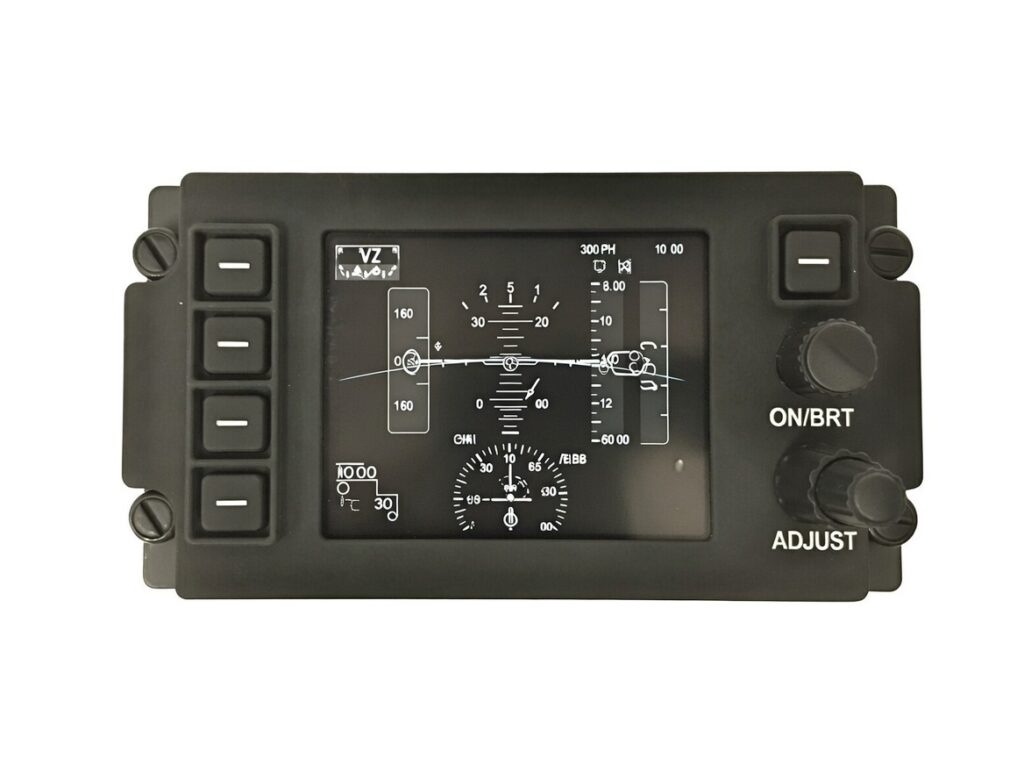
- Aerospace: Cockpit instruments and electronic flight bags must adapt instantly to changing conditions—bright sunlight through windshields at altitude, shaded interiors, or low-light night flying. Transflective displays offer glare-free readability without excessive backlight power that could drain aircraft systems or create distracting heat/hotspots.
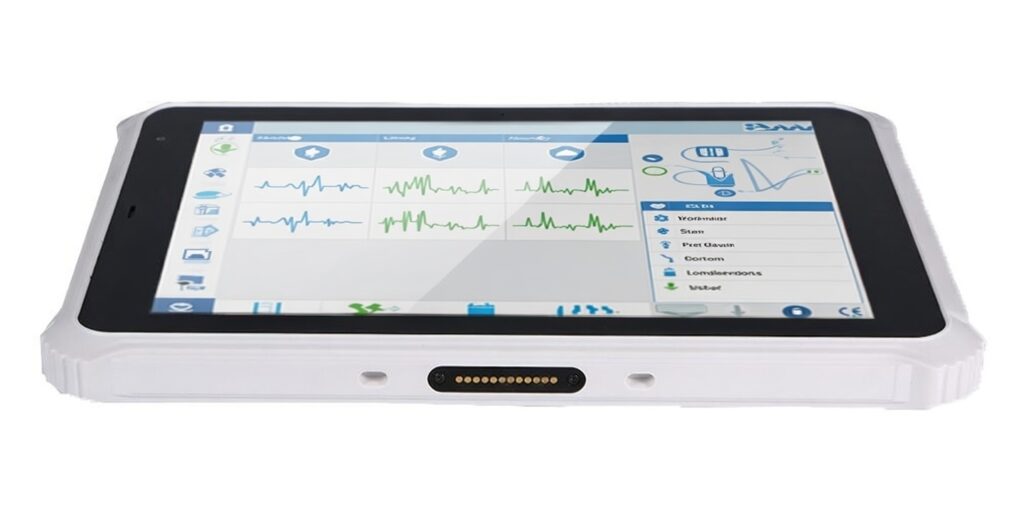
- Medical/Outdoor Equipment: Portable diagnostic devices, field hospital monitors, and emergency response tablets must function in clinics (controlled lighting), outdoor triage (direct sun), or mobile ambulances (variable conditions). Transflective ensures critical patient data remains visible without power compromises that could limit portability or runtime in remote or disaster scenarios.
In conclusion, transflective LCD technology represents a sophisticated, efficient advancement in display design—offering unmatched visibility in direct sunlight, dramatic power savings for extended battery life, seamless adaptability across all lighting conditions, enhanced durability through ruggedization synergy, and compelling cost-effectiveness at the system level. It directly addresses the key pain points of harsh, variable, and mission-critical environments without forcing the trade-offs seen in traditional transmissive or reflective alternatives. Whether upgrading legacy systems or developing next-generation rugged solutions, transflective LCDs from AGDisplays provide the reliability and performance that demanding industries require.