

Have you ever tried reading a smartphone screen or laptop while sitting on a sunny patio, only to find yourself staring back at your own reflection? Or maybe you’ve stepped up to an outdoor ATM on a bright afternoon, cupping your hands around the monitor just to make out where to tap?
For consumer gadgets, screen glare is an annoying inconvenience. But in critical environments—like a naval vessel navigating choppy waters, an ambulance crew reviewing vital signs on a rugged tablet, an aircraft cockpit, or a heavy-machinery control panel—a display that becomes washed out or unreadable can lead to operational delays, expensive mistakes, or serious safety hazards.
Historically, display manufacturers tried to solve sunlight readability by simply making backlights brighter. But boosting brightness consumes massive amounts of power, generates excess heat, and degrades battery life without solving the underlying cause of glare.
The true solution lies in how the display itself is constructed. That process is called optical bonding.
This comprehensive guide breaks down what optical bonding is, how it works, why standard screens fail outdoors, and why filling a microscopic gap makes modern displays vastly clearer, tougher, and more reliable.
The Root Problem: The Hidden Air Gap inside Standard Displays
To understand why optical bonding is so transformative, we first need to look at how a standard liquid crystal display (LCD) module is built.
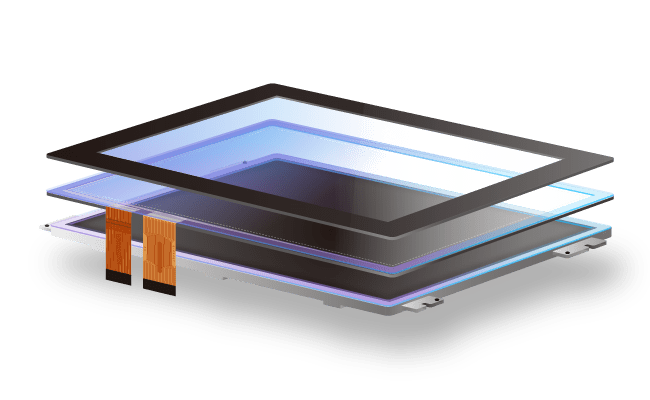
A typical unbonded display assembly consists of two main hardware layers:
- The TFT LCD Panel: The electronic component underneath that actually generates the images, colors, and text.
- The Cover Lens / Touch Screen: The protective front glass or touch sensor that guards the display from scratches, impacts, and fingerprints.
In traditional, budget-conscious manufacturing, the cover glass is attached to the LCD panel using a thin strip of double-sided tape or adhesive along the outer borders. This leaves a small, empty pocket of space—an air gap—trapped between the LCD surface and the back of the cover glass.
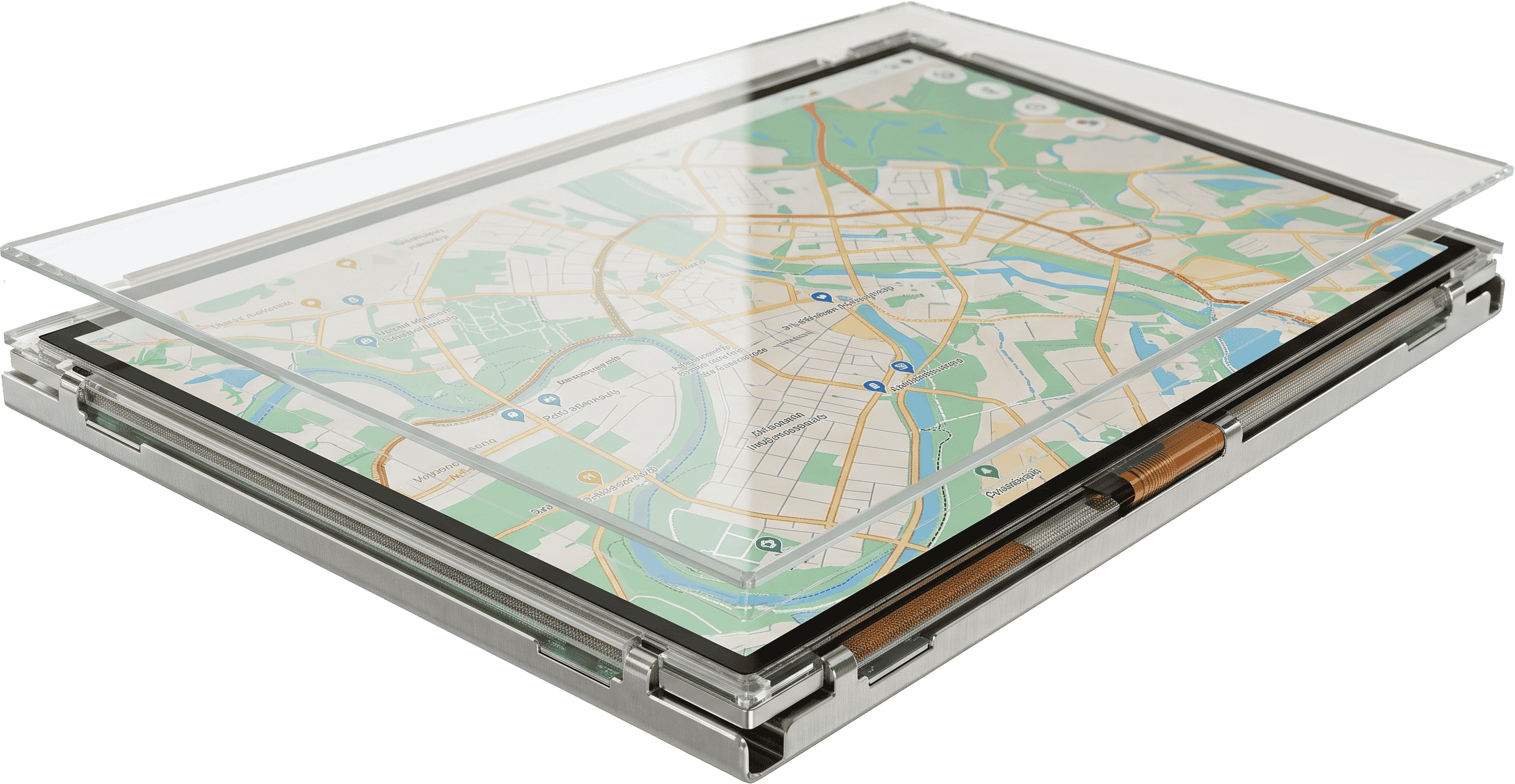
While an air gap is cheap and easy to assemble on a mass scale, air is an optical nightmare when light hits the display.
The Simple Science of Reflection and Glare
Why does an air gap cause so much glare? The answer comes down to how light travels through different materials.
The “Straw in the Water” Effect
Have you ever noticed how a drinking straw looks bent or broken when you place it inside a glass of water? That visual bend happens because light changes speed as it moves from air (where it travels very fast) into water (where it moves more slowly).
In physics, the measure of how much a material slows down and bends light is called its refractive index:
- Air: Light travels through air with almost zero resistance.
- Standard Display Glass: Glass is much denser, slowing light down.
- LCD Outer Polarizer: The plastic film on top of the LCD panel also slows light down.
Whenever light hits a boundary where the refractive index changes sharply—such as going from dense glass into thin air—some of the light rays bounce backward like a tennis ball hitting a wall. This unwanted bouncing light is what we call specular reflection, or glare.
The Three Reflection Points of an Air-Gap Display
In an unbonded display sitting under direct sunlight, sunlight must cross three separate surface boundaries before reaching your eyes:
- Boundary 1 (Sunlight hitting the top glass): Light transitions from outside air into the cover glass. About 4.2% of the light bounces off the front surface.
- Boundary 2 (Glass to internal air gap): Light leaves the back side of the glass and enters the internal air space. Another 4.2% reflects backward.
- Boundary 3 (Air gap to LCD surface): Light leaves the internal air gap and hits the surface of the LCD panel. Another 4.0% reflects backward.
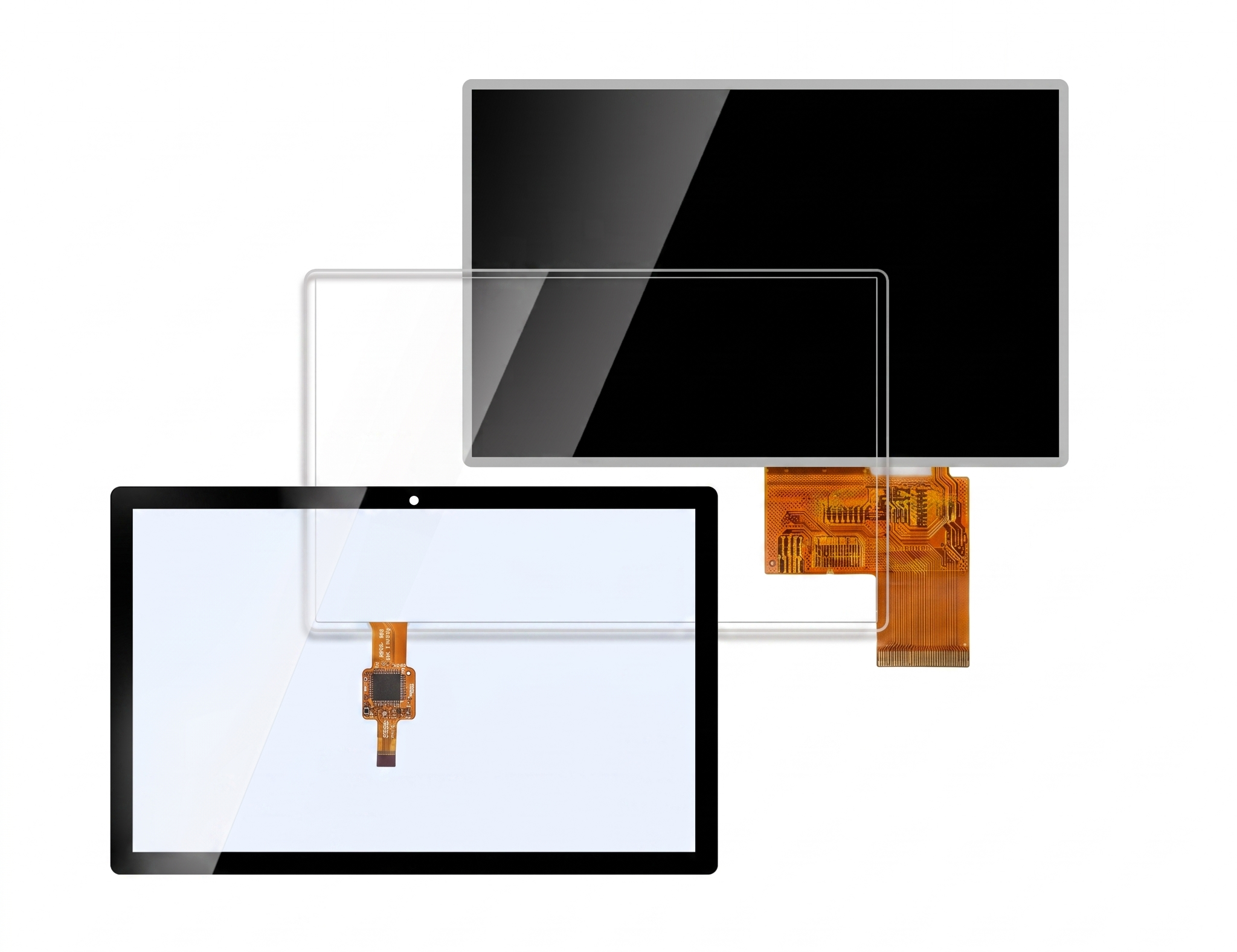
When you add those bounce points together, up to 14% of surrounding ambient light is reflected directly into the viewer’s eyes.
On a bright sunny day where ambient light reaches 10,000 lux or higher, 14% reflection creates a blinding white wash across the screen. The image generated by the LCD underneath simply cannot compete with that level of surface glare, rendering the screen unreadable.
Enter Optical Bonding: Eliminating the Bounce
Optical bonding solves the reflection problem by replacing the empty air gap with an Optically Clear Adhesive (OCA)—a transparent optical adhesive or resin specially formulated to match the optical density of glass.
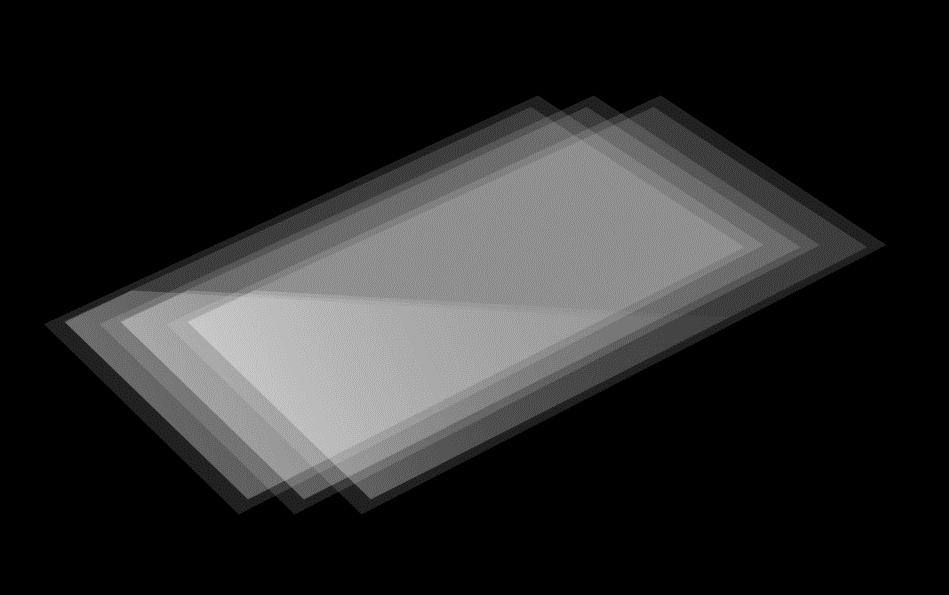
Because the refractive index of the adhesive is virtually identical to both the cover glass and the LCD polarizer, the internal refractive boundaries disappear completely.
Light rays pass straight through the cover glass, through the optical adhesive layer, and into the LCD panel as if they were traveling through a single solid block of glass.
The Result: Total surface reflection drops from 14% down to under 1% (and down to 0.2% when paired with an anti-reflective coating on the outer glass). Instead of a washed-out mirror, you get rich contrast, vibrant colors, and sharp text even under direct mid-day sunlight.
Comparative Analysis: Air Gap vs. Optical Bonding
| Performance Metric | Traditional Air Gap Screen | Optically Bonded Screen | Real-World User Benefit |
| Total Reflection Rate | 8.0% – 14.0% | 0.2% – 1.5% | Reduces glare by over 90%, preserving screen clarity outdoors. |
| Sunlight Contrast Ratio | Low (< 10:1 under 10k lux) | High (> 80:1 under 10k lux) | Keeps black levels dark and text crisp under direct solar light. |
| Light Transmission | 86% – 90% | > 98% | More backlight light escapes, improving efficiency. |
| Internal Fogging / Moisture | High risk in humid conditions | Zero risk (100% solid sealed) | Prevents internal condensation during sudden temperature shifts. |
| Impact Resistance | Fragile (glass flexes into air space) | Highly Durable (composite beam) | Increases shatter resistance by up to 300%. |
| Touch Precision | Parallax error at side angles | Zero parallax error | Icons and touch targets register precisely under your fingertip. |
| Dust / Debris Entry | Dust can enter frame openings | Completely sealed seal | Ideal for dusty industrial, agricultural, or desert settings. |
Key Material Formats: LOCA vs. OCA
When engineering an optically bonded display, selection of the optical adhesive depends on panel dimensions, production volume, cover glass features, and target operating environments.
The two primary material formats used in modern cleanroom processing are LOCA (Liquid Optically Clear Adhesive) and OCA (Optically Clear Adhesive Tape).

1. LOCA (Liquid Optically Clear Adhesive)
LOCA is a specialized liquid resin dispensed across the LCD surface in liquid form before the cover glass is pressed down.
- How it works: Liquid resin is dispensed automatically in precise patterns (such as continuous serpentine lines or a “dam-and-fill” border). As the cover glass is lowered, the liquid flows evenly into every nook, corner, and micro-gap before being cured with ultraviolet (UV) light.
- Best for: Large displays (over 10.1 inches), displays with thick printed border inks (such as black bezel borders around touch screens), curved glass panels, or ultra-rugged applications requiring high shock absorption.
- Key Advantages: Excellent self-leveling performance, superior cushion against severe physical impacts, and low strain on delicate TFT display cells.
2. OCA (Optically Clear Adhesive – Dry Film)
OCA comes in pre-manufactured, solid adhesive sheets protected between release liners—similar to a ultra-transparent, double-sided tape.
- How it works: Automated lamination equipment strips the protective liners and rolls the dry adhesive film onto the glass or LCD panel under controlled pressure and vacuum.
- Best for: Small to mid-sized flat screens (such as smartphones, small handhelds, or compact medical monitors up to 10.1 inches) produced in high volumes.
- Key Advantages: Fixed thickness uniformity, zero liquid overflow, and clean, fast processing.
Polymer Chemistry Options
Beyond the physical format (liquid vs. film), the chemical base of the adhesive determines how the bonded screen handles temperature extremes, sunlight, and mechanical stress:
Silicone-Based Adhesives
- Operating Temperature Range: -55 °C to +150 °C
- Key Strengths: Silicone adhesives remain remarkably flexible across ultra-wide temperature bands. They do not turn yellow or break down under intense UV exposure (solar radiation), making them the preferred choice for military avionics, marine electronics, and aerospace cockpits. Silicone is also highly reworkable, allowing technicians to disassemble and repair valuable display panels if needed.
Acrylic-Based Adhesives
- Operating Temperature Range: -40 °C to +85 °C
- Key Strengths: Acrylic adhesives deliver high peel strength and excellent clarity (> 99% light transmission). They bond strongly to diverse substrates, including polycarbonate plastic covers and treated glass. They are widely utilized in commercial, medical, and general industrial monitors.
How Optical Bonding Is Done: Inside the Cleanroom Process
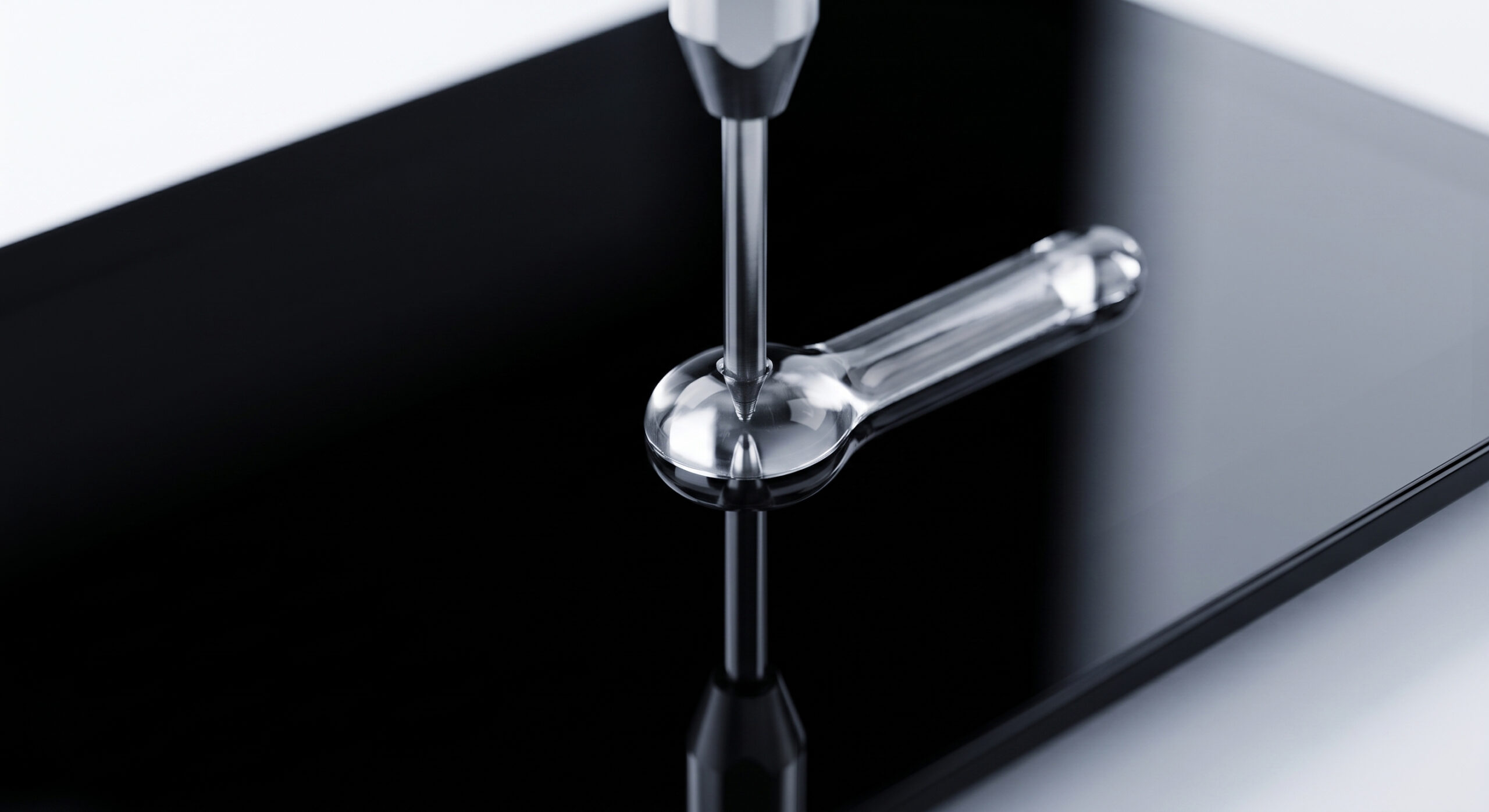
Optical bonding is a high-precision manufacturing process that requires specialized cleanroom environments, automated robotic machinery, and rigorous environmental control. Even a microscopic dust particle trapped inside the bonding layer will create a permanent visual flaw.
Step 1: Substrate Cleaning and Plasma Surface Activation
The display panel and cover glass enter an ISO Class 5 (Class 100) cleanroom—an environment hundreds of times cleaner than an operating room. Automated air knives and static eliminators remove surface dust. Substrates then undergo surface plasma treatment, which cleans the glass at a molecular level and increases surface energy, ensuring the adhesive spreads smoothly without pulling away at the edges.
Step 2: Precision Dispensing
For liquid bonding (LOCA), automated 3-axis robotic gantries dispense resin across the panel in pre-calculated geometric patterns. This guarantees that when the cover glass meets the liquid, the adhesive spreads outward in an even, continuous wave without trapping pockets of air.
Step 3: Vacuum Lamination
The glass and display are joined inside a sealed vacuum chamber where atmospheric pressure is pulled down close to zero. Bonding in a vacuum ensures that any tiny air pockets dissolve into the liquid matrix rather than forming visible bubbles under the glass.
Step 4: Dual-Stage Curing
The assembled panel passes under high-intensity UV LED lights. Within seconds, the UV energy triggers a chemical reaction, transforming the liquid resin into a solid, resilient gel layer. If the glass has a dark printed border that blocks UV light, a secondary cure mechanism (such as gentle heat or ambient moisture curing) cures the hidden adhesive underneath over the next 24 hours.
Step 5: High-Pressure Autoclaving
As a final quality check, bonded displays are placed into a high-pressure autoclave chamber. By applying moderate pressure and gentle warmth for 20 minutes, any remaining microscopic gas bubbles are compressed and dissolved into the polymer layer, leaving a crystal-clear, defect-free screen.
The 5 Core Advantages of Optically Bonded Displays
Why do engineers and system integrators choose optical bonding for critical equipment? The benefits extend far beyond glare reduction.
1. Unmatched Sunlight Readability
By eliminating internal reflections, optically bonded displays preserve sharp contrast and rich color saturation under direct sunlight. You no longer need to over-engineer backlights with massive power requirements to make a display visible outside.
2. High-Impact Structural Ruggedization
An unbonded cover glass acts like a flexible trampoline: when struck by a heavy tool, rock, or dropped object, the glass bends inward into the empty air gap, cracking the fragile LCD cell underneath.
When optically bonded, the adhesive layer acts as a shock-absorbing cushion, linking the front glass and display into a single structural sandwich. Impact energy spreads across the entire surface area of the display rather than concentrating at the point of contact.
Impact Rating Upgrade: Optically bonded displays routinely achieve IK09 and IK10 impact ratings, withstanding direct physical impacts of up to 20 Joules (equivalent to dropping a 5 kg steel ball onto the screen from a height of 40 cm).
3. Total Prevention of Internal Fogging and Condensation
When equipment moves between extreme temperature environments—such as a military vehicle driving out of a air-conditioned hangar into humid heat, or a marine boat operating in freezing ocean spray—moisture trapped inside an air gap condenses on the cold inner glass, causing the screen to fog up from the inside.
Because optical bonding completely fills the space between the glass and display with solid adhesive, there is zero void space for moisture, humidity, or dust to enter. Internal fogging becomes physically impossible.
4. Superior Touch Screen Accuracy and Zero Parallax
On traditional touch screens with a thick air gap, looking at an icon from an angle creates a visual gap between where your finger touches the outer glass and where the icon sits on the LCD underneath. This visual distortion is called parallax error.
Optical bonding brings the touch layer flush against the display image, eliminating parallax error. Tap targets respond instantly under your touch, improving precision when operating software with small buttons or fine map controls.
5. Increased Thermal Efficiency and Battery Savings
Air is a poor conductor of heat, trapping thermal energy inside display housings. The optical adhesives used in bonding have much higher thermal conductivity than static air, helping transfer heat away from the LCD panel out to the front glass frame.
Furthermore, because optical bonding improves light transmission by removing internal glare, displays can run at lower backlight brightness levels while achieving superior legibility—reducing overall power consumption and extending device battery life in portable handhelds.
Where Optical Bonding Is Essential: Key Industry Applications
While standard air-gap construction remains common in indoor office monitors and budget consumer televisions, optical bonding is considered mandatory across industries where reliability and visibility are non-negotiable:
Military & Defense Applications
- Field Gear: Tactical handheld radios, soldier-wearable displays, and rugged field tablets.
- Vehicles & Aviation: Cockpit flight displays, armored vehicle navigation hubs, and submarine control consoles.
- Key Requirements: Extreme shock/vibration tolerance, zero solar reflection, non-yellowing UV resistance, and operational temperature ranges down to -40 °C.
Marine & Nautical Navigation
- Equipment: Fishfinders, chartplotters, radar screens, and open-bridge helm displays.
- Key Requirements: Resistance to direct solar wash-out, protection against saltwater spray intrusion, and complete elimination of internal fogging caused by sudden temperature shifts.
Medical & Healthcare Equipment
- Equipment: Patient monitoring carts, portable diagnostic equipment, mobile ultrasound units, and surgical monitors.
- Key Requirements: Wide viewing angles, seamless touch precision, high chemical resistance for frequent disinfections, and zero dust entrapment.
Industrial Automation & Public Kiosks
- Equipment: Outdoor ATMs, EV charging stations, gas pump payment screens, heavy agricultural machinery cabs, and factory floor control panels.
- Key Requirements: Vandalism impact resistance (IK10 ratings), 24/7 all-weather outdoor operation, and low maintenance overhead over 5 to 10-year lifecycles.
Summary: Upgrading Your Display Strategy
Selecting the right display architecture comes down to where and how your product will be used. While air-gap displays offer lower initial assembly costs for controlled indoor spaces, they introduce severe performance bottlenecks in demanding outdoor or industrial environments.
By eliminating the internal air gap with optical bonding, you unlock the full performance potential of your LCD panel:
- Brighter, clearer images under direct sunlight.
- Up to 300% greater physical impact resistance.
- Zero internal fogging or dust intrusion.
- Precise, natural touch responsiveness.
Whether you are retrofitting an existing display panel for outdoor deployment or designing a next-generation rugged device from scratch, optical bonding remains one of the single most cost-effective display enhancements available.
Partnering with AGDisplays for Custom Optical Bonding Solutions
When off-the-shelf displays fall short in harsh or high-ambient environments, AGDisplays brings decades of specialized design, engineering, and manufacturing expertise to bridge the gap. As an industry leader in custom display enhancements, AGDisplays offers complete end-to-end optical bonding solutions tailored to your program’s exact environmental, optical, and mechanical specifications. Operating out of state-of-the-art US manufacturing facilities with dedicated Class 100 cleanroom environments, our technical team processes displays ranging from small handheld devices to large-format 80-inch industrial monitors.
Whether your application demands silicone-based LOCA for high-altitude avionics, ruggedized touch screen lamination with IK10 impact protection, or integrated EMI shielding and anti-reflective film treatments, AGDisplays delivers scalable production—from low-volume prototype builds to full-scale OEM manufacturing. By partnering with AGDisplays, you gain access to comprehensive design consultation, supply chain consolidation, and rigorous quality assurance that ensures your display performs flawlessly when clarity and reliability matter most.
Contact the AGDisplays engineering team today to evaluate your display stack, request a sample demo, or discuss custom optical bonding options for your next project.