GLASS-FILM-GLASS: Resistive Touch Screens with Top Layer Protection
A GFG or “Glass-Film-Glass” Resistive Touch Screen is a Resistive Touch Screen that has been enhanced with an additional layer of protective glass.






A GFG or “Glass-Film-Glass” Resistive Touch Screen is a Resistive Touch Screen that has been enhanced with an additional layer of protective glass.
LCDs are often thought of as delicate and complicated, however they can be used (and thrive) in extreme, high traffic environments. From your smart phone, to the food menu at the gas station, LCDs can be designed for near continuous use and robust interactivity. The ATM display doesn’t freeze no matter how cold it is outside, and the fashion model mall kiosk shines like the sun. Nevertheless, between the assembly line and the line of duty, a display must make a pit stop at an LCD integrator like AGDisplays. AGDisplays and integrators alike provide LCD Design Solutions by converting the basic off-the-shelf LCD Module into a rugged and enhanced LCD Design ready for the real world.
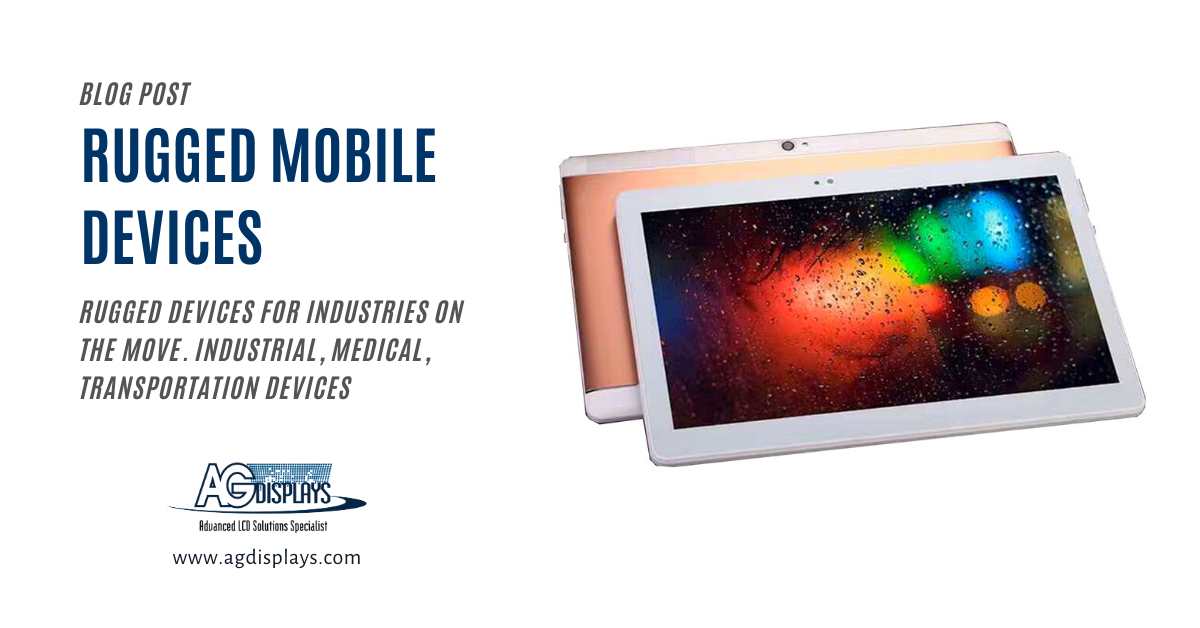
AGDisplays’ line of rugged mobile devices offer many practical improvements over commercial smartphones and tablets.
Liquid Crystal Displays (LCDs) are the silent workhorses of our tech-driven world, illuminating everything from the dashboard of a delivery truck to the heart monitor in an ICU. Their knack for delivering sharp visuals, vibrant colors, and low-power performance has made them indispensable across industries—consumer electronics, healthcare, transportation, manufacturing, and beyond. But as we lean harder on these screens, the bar for their performance keeps rising. It’s not enough for an LCD to shine bright out of the box; it needs to keep shining through years of heat, cold, jolts, and wear—especially in places where failure isn’t an option.
In the high-stakes world of industrial operations—spanning bustling factory floors, sun-scorched oil rigs, sterile medical labs, and rugged military outposts—Liquid Crystal Displays (LCDs) are the unsung heroes delivering critical data that powers efficiency, ensures safety, and maintains uptime. These displays underpin Human-Machine Interfaces (HMIs), diagnostic equipment, navigation systems, and more. Yet, as time marches on, even the most durable LCDs begin to falter, with fading clarity, weakened contrast, and diminished readability threatening their effectiveness. The root cause often lies in a subtle but essential component: the polarizer.
Cover glass serves as a protective shield for LCD displays, shielding them from physical damage, dust, moisture, and other environmental factors. However, not all cover glass is created equal. There is a wide variety of materials and technologies available for cover glass, each with its own set of properties and applications. In this blog post, we’ll explore and compare some of the most common types of cover glass used in LCD displays, shedding light on their similarities, differences, and the factors to consider when choosing the right one for your specific needs.
AGDisplays provides a comprehensive screen print and glass service, elevating the appearance of your display with a polished and professional finish. We offer a hardened glass/touchscreen configuration, offering various ink options for personalized logo customizations. Our custom branding ensures that your product stands out with a unique and distinctive touch.
In the fast-paced world of industrial technology, Liquid Crystal Displays (LCDs) remain critical for delivering vital information across sectors like manufacturing, medical, transportation, marine, aerospace, and defense. These displays power everything from factory floor Human-Machine Interfaces (HMIs) to diagnostic medical equipment and ruggedized navigation systems. However, as display technologies evolve and manufacturers phase out older models, managing end-of-life (EOL) LCDs poses a significant challenge for industries that depend on long-term operational continuity. Obsolescence can lead to costly downtime, system redesigns, and increased waste, but with strategic solutions, businesses can extend the lifespan of their displays, ensuring reliability, cost savings, and sustainability. At AGDisplays, we specialize in EOL LCD solutions, offering innovative repair, refurbishment, and enhancement services to keep industrial displays functional well beyond their expected lifecycle. This blog explores proven strategies for extending display longevity in industrial applications, addressing technical, economic, and environmental considerations.
Retrofitting an LCD means upgrading an older display device, such as a CRT (cathode ray tube) monitor or an older LCD, by replacing its outdated display panel with a modern, higher quality LCD panel. This process involves disassembling the older display device, removing the existing panel, and replacing it with a new panel that is compatible with the device’s existing hardware and software.
Whether LEDs or CCFLs, typical LCD monitors need a backlight to produce visible images on screen. Most modern displays employ the use of LEDs to illuminate their images, however many older or lower cost displays still use the tried-and-true compact cold fluorescent as their light source. (OLEDs, a newer type of self-illuminating display, are a topic for another discussion).